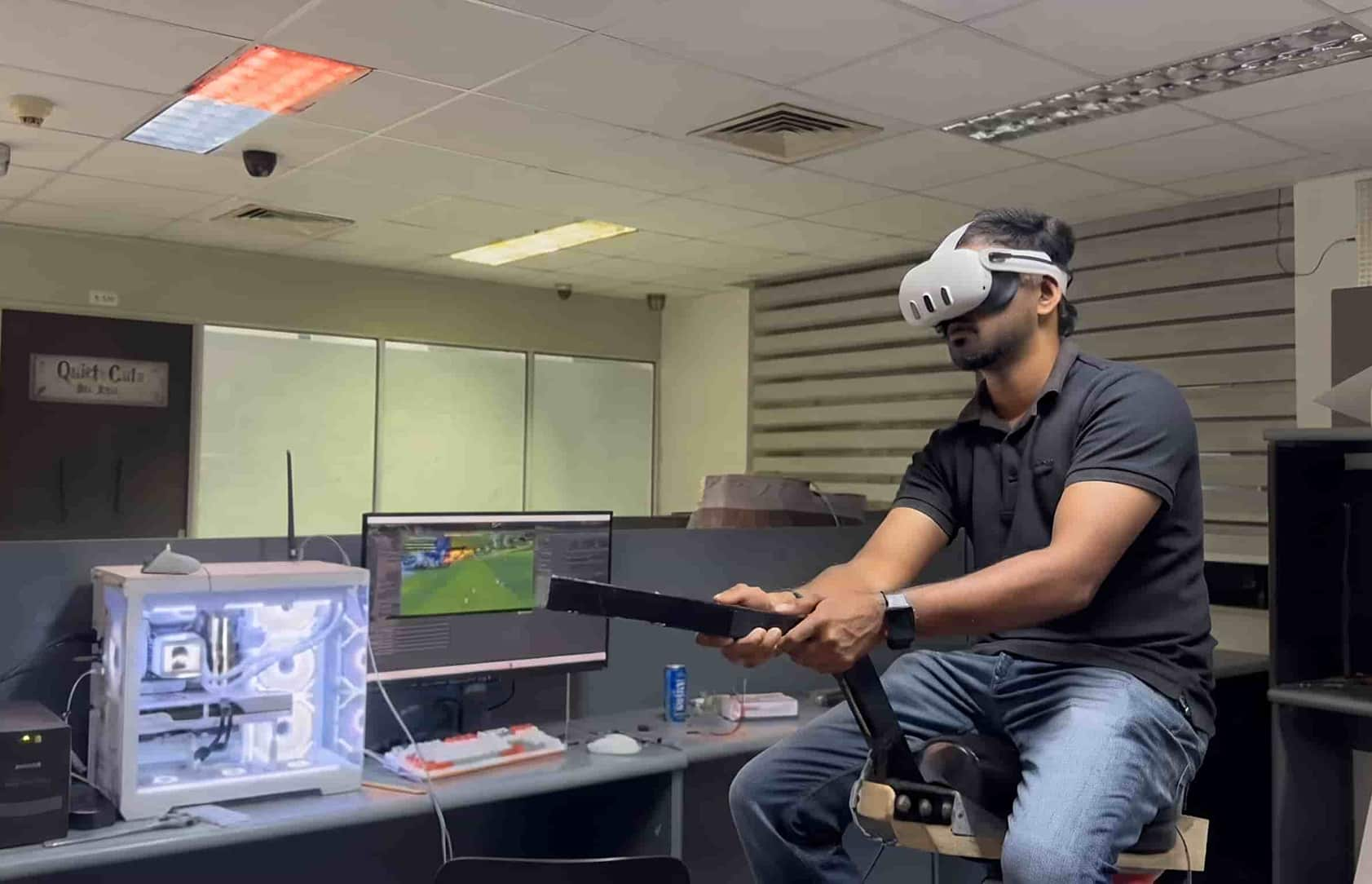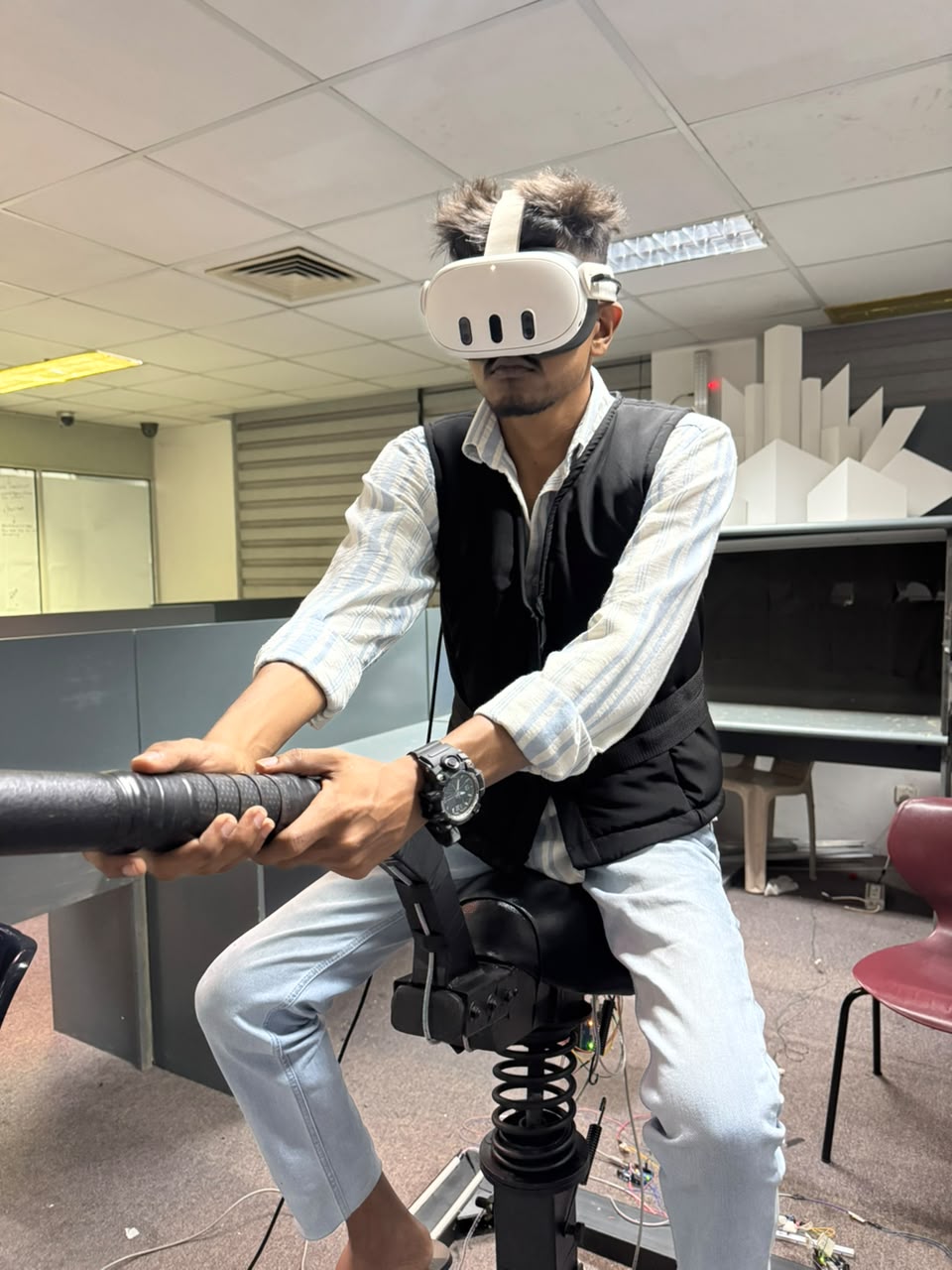
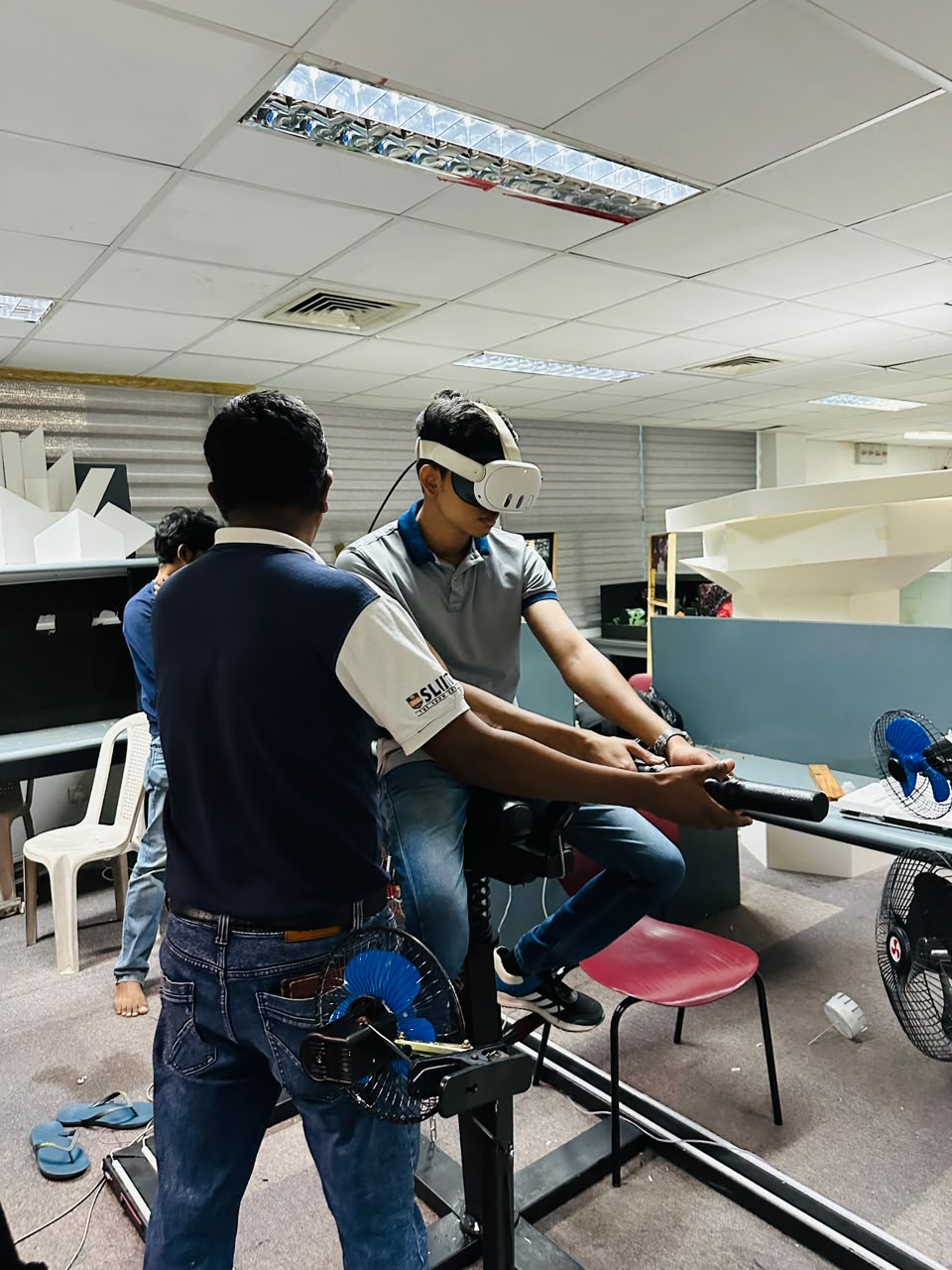
The project incorporates dynamic flight physics to translate user inputs into smooth, continuous spatial traversal within the virtual environment.
Acceleration, momentum, and coasting behaviors are managed using interpolation techniques like Mathf.Lerp to ensure transitions feel physically grounded rather than abrupt or jarring. This ensures that when a user accelerates or decelerates, the virtual speed changes with natural inertia, closely mimicking real-world aerodynamic principles.
Flight Dynamics and Stability Control
The flight physics engine also integrates strict deadzone thresholds to filter out unintended micro-drifting during flight maneuvers.
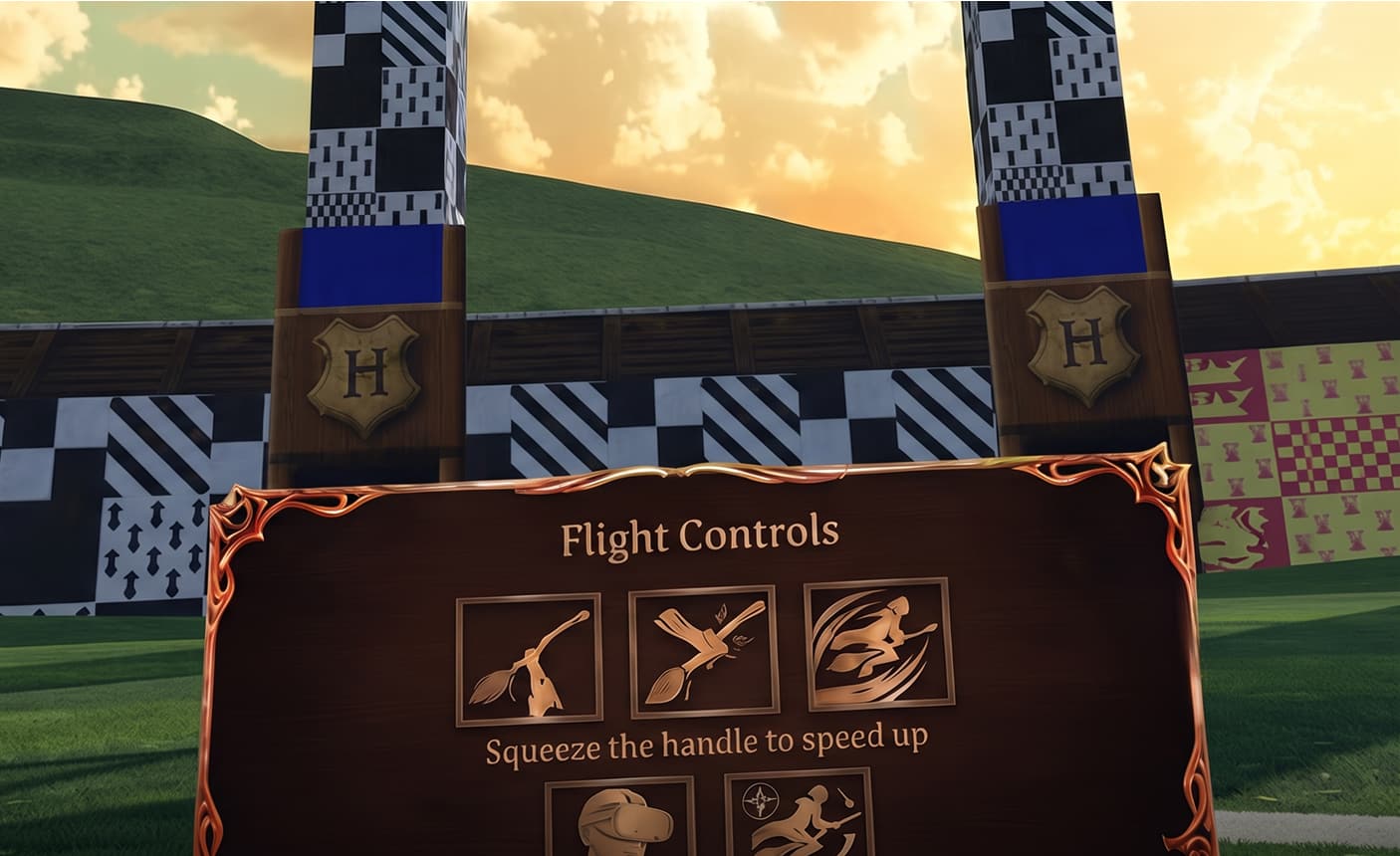
By establishing clean input boundaries, the system prevents accidental trajectory shifts and maintains stable heading control.
Consequently, the combination of smoothed momentum, interpolation, and threshold filtering significantly improves the overall stability and comfort of immersive flight simulation. This structured physics model provides a reliable foundation for synchronizing virtual velocity with physical airflow and motion feedback across the platform.
Flight Physics Integration and Inertia Handling
The flight physics framework continuously computes velocity and acceleration vectors derived from the user's postural and handle inputs.
"Using linear interpolation for flight momentum ensures that speed changes reflect natural inertia and eliminate sudden velocity spikes during navigation."
This computational approach allows the system to bridge software-level movement logic with physical actuation smoothly.
Each adjustment in flight velocity is immediately mapped to both visual motion and the external hardware layer.
Conclusion
The flight physics subsystem highlights a critical component in bridging visual traversal with physical sensation.
Addressing these simulation dynamics requires careful mathematical modeling rather than simple controller input mapping. By combining smooth acceleration, inertia coasting, and strict deadzone calibration, the system achieves a robust and responsive flight experience. This ensures high fidelity, comfort, and performance repeatability across the entire multisensory VR architecture.