VR Embodiment Gap
While modern head-mounted displays deliver high-resolution imagery, visual motion alone fails to reproduce the complete sensorimotor experience of physical movement. This creates a severe disconnect between sight and physical reality.


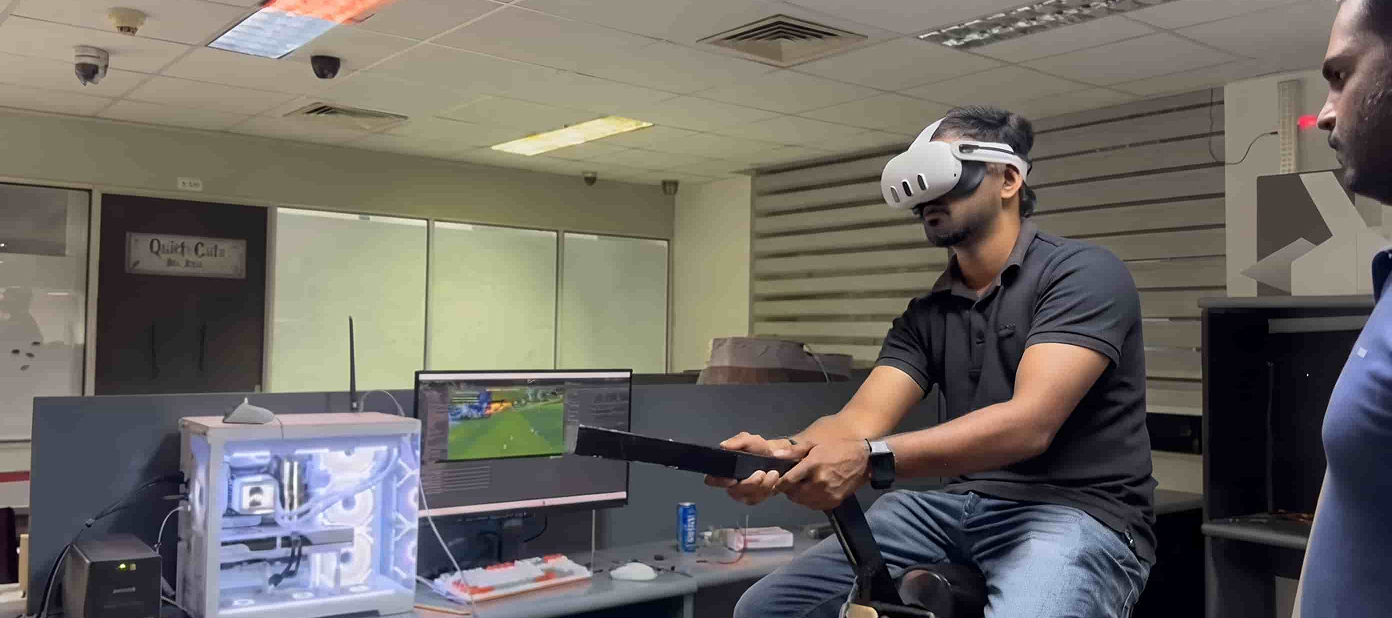
Addressing Limitations in VR Navigation Through Design Science Research.
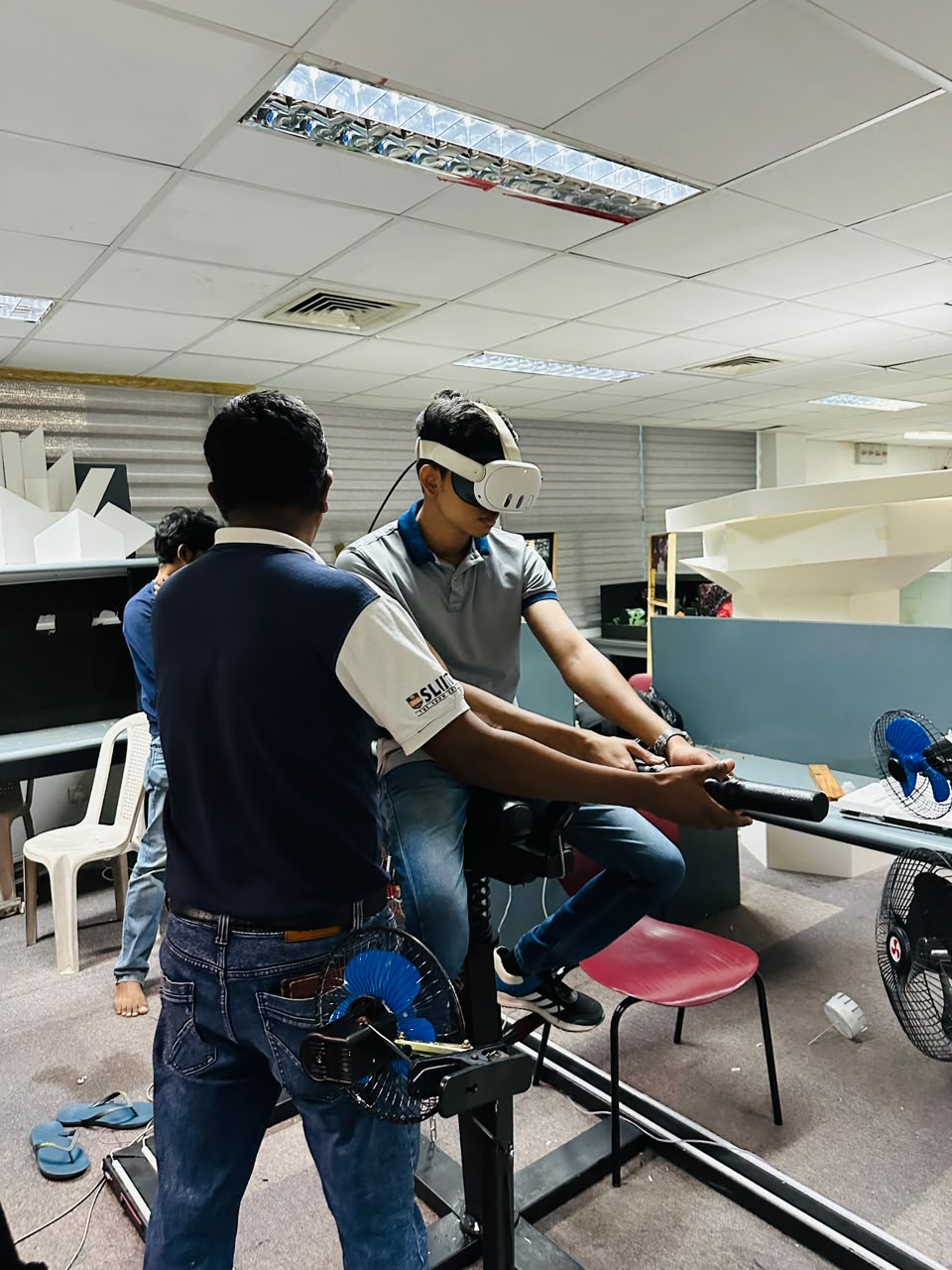
While modern head-mounted displays provide stereoscopic immersion, visual motion alone fails to reproduce complete sensorimotor feedback, leading to cybersickness. Following a Design Science Research approach, our project builds and evaluates an integrated VR motion platform to bridge this embodiment gap. Existing literature indicates the following

/TECHNOLOGY
STACK
Built using robust hardware-software integration tools to synchronize virtual flight.
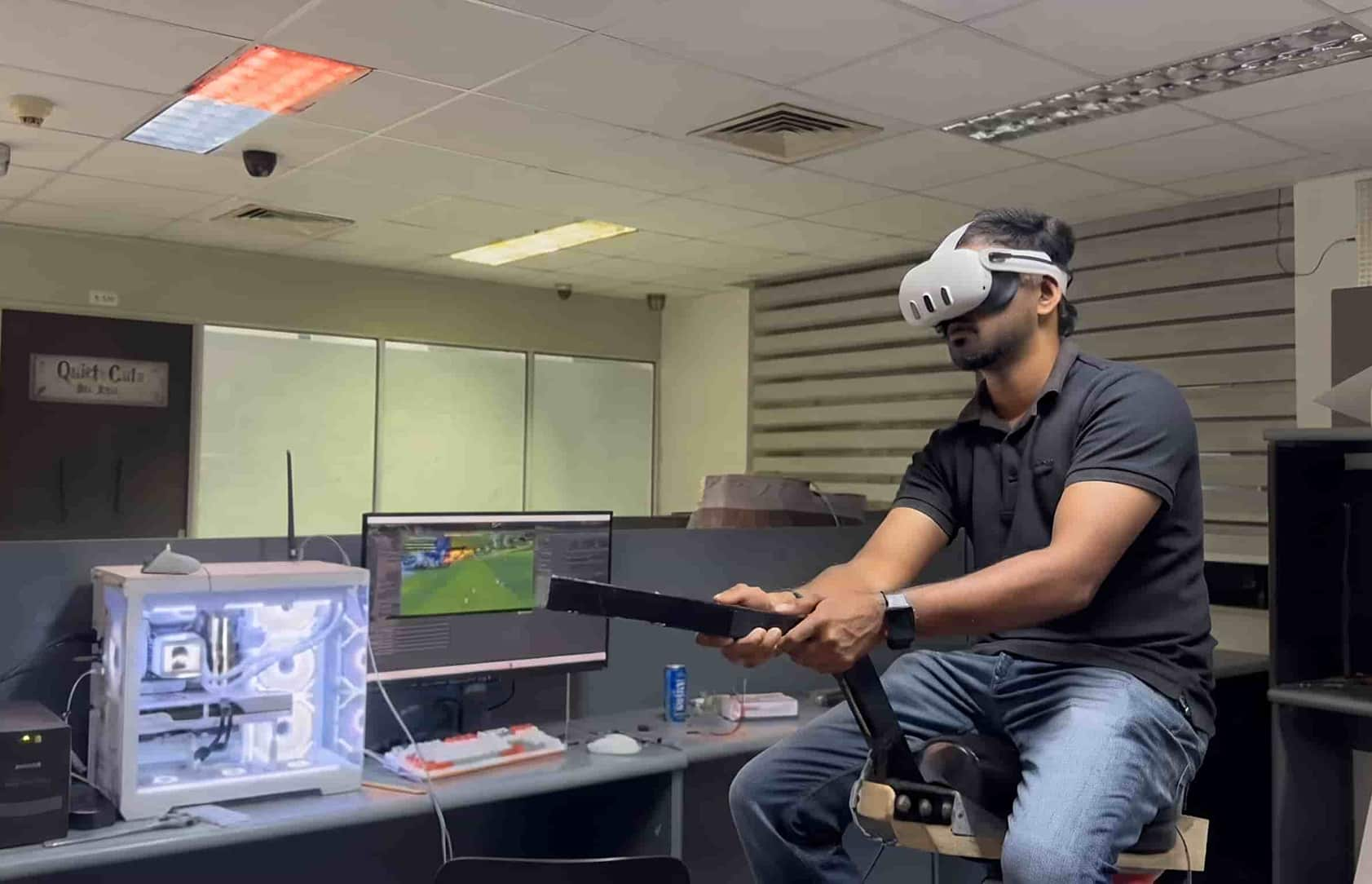
We integrate body-linked navigation, motion rendering, environmental mapping, and synchronized physical feedback into a unified architecture.
Maps VR navigation parameters to real-time actuator commands.
Translates flight into coordinated airflow & haptic cues
maintain temporal alignment with virtual events.
Participant responses from initial user studies evaluating immersion, realism, and control.

Spot-on latency, easily beats playing flight sims with basic analog thumbsticks.


Handle trigger could have stronger spring tension, but overall the immersion was incredible.

but the vest vibrations felt a bit faint during rapid altitude climbs.

Landing came together seamlessly.
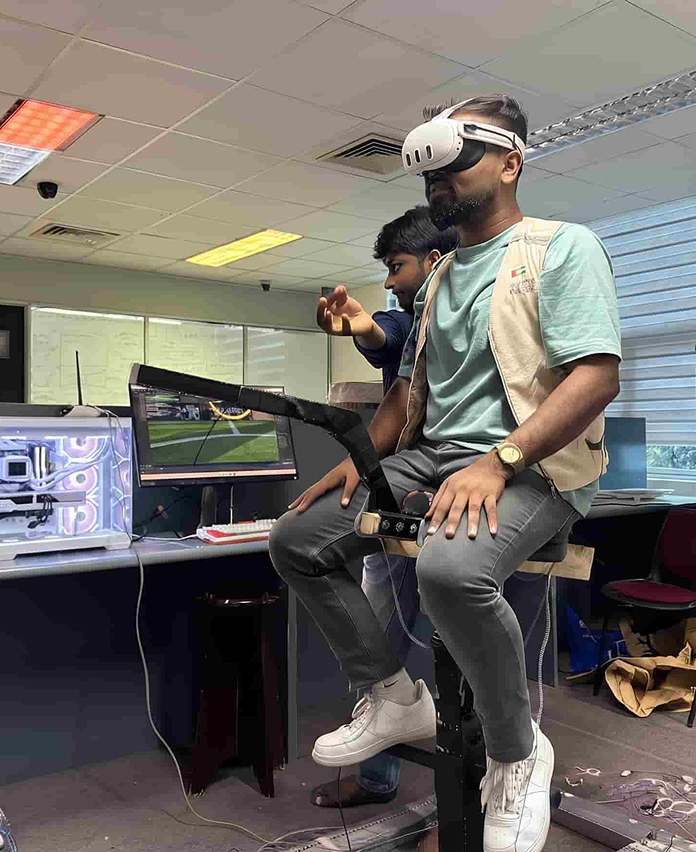
Sensation of altitude change was amazing.

but everything else felt remarkably realistic.

It felt completely natural to fly once you get the grip down on the flight handle.

Explore more in our research
The research exploration never ends. Dive into our technical logs, system breakdowns, and developmental case studies detailing the design of our multisensory VR motion platform.

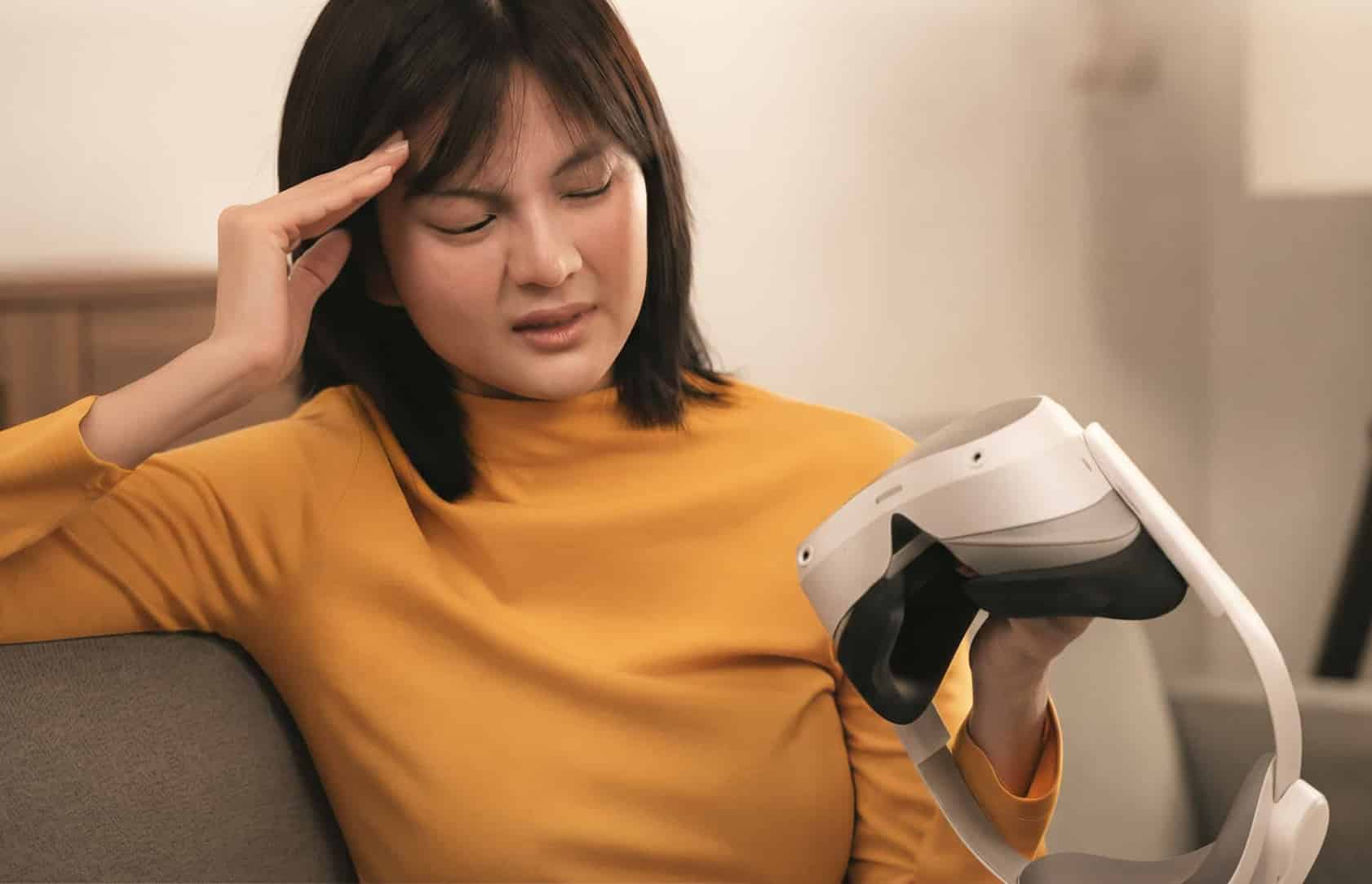
Research & Experimental Data
Access comprehensive telemetry logs, sensor calibration scripts, and participant evaluation metrics from our physical VR flight trials.
Raw hardware sensor telemetry, real-time actuator response timings, and embedded communication logs.

Empirical human-participant evaluation records, subjective presence questionnaires, and latency benchmarking trials.
Addressing common questions regarding our hardware architecture, safety constraints, and experimental findings.

Moving in VR without physical sensations causes sensory mismatch and motion sickness. The platform resolves this by pairing visual flight with real-time seat tilt, variable airflow, and localized haptic cues to maintain bodily coherence.
Gyroscope and pressure sensors capture body-lean tilt and handle compression, directly driving pitch, roll, and flight velocity without relying on traditional joysticks.
Environmental states in Unity trigger variable airflow blowers, directional wind currents, and vibrotactile vest pulses to recreate ambient flight forces.
The navigation architecture applies strict deadzone threshold filtering to tilt-to-turn inputs, separating deliberate body-lean maneuvers from involuntary movements to maintain stable heading control.