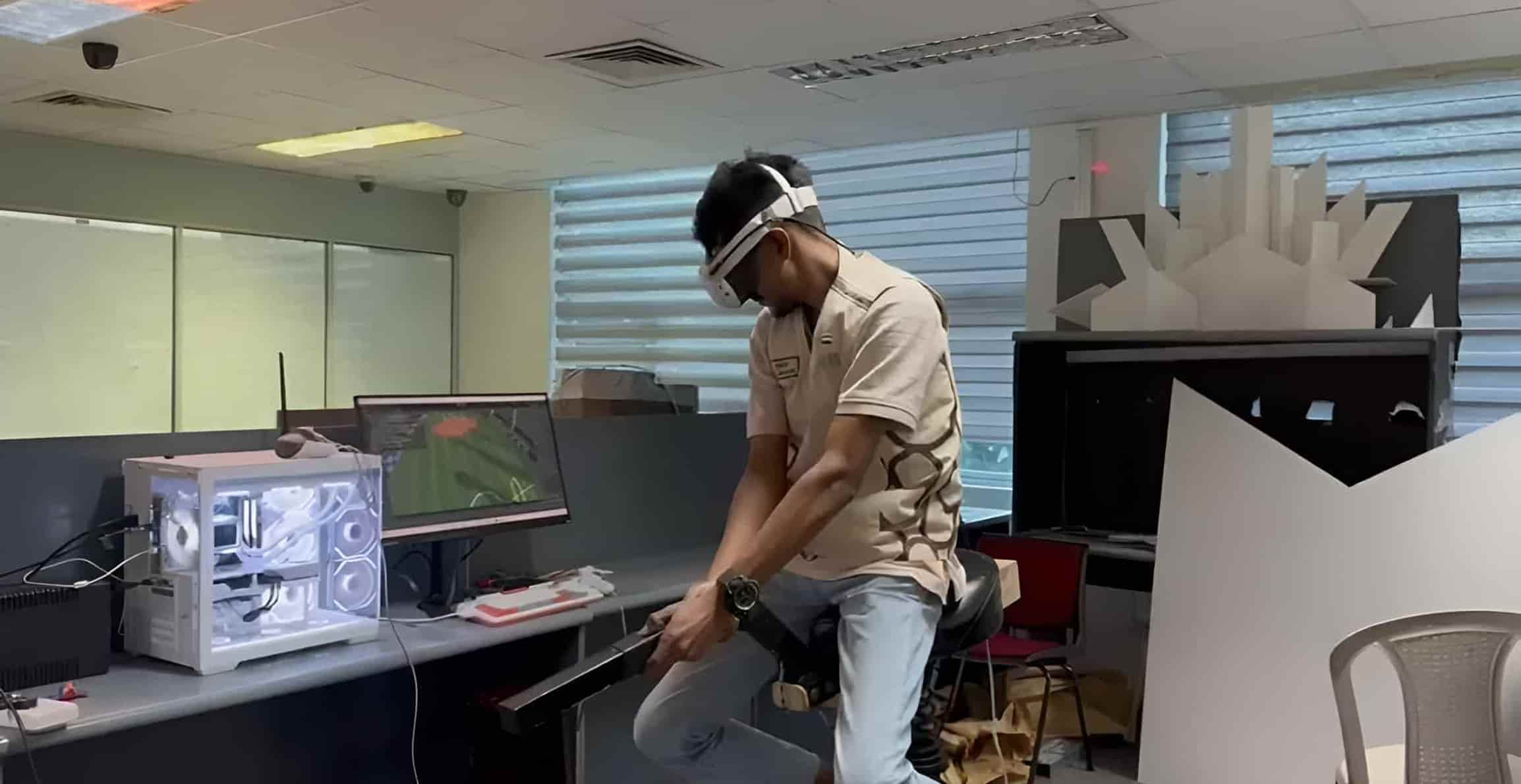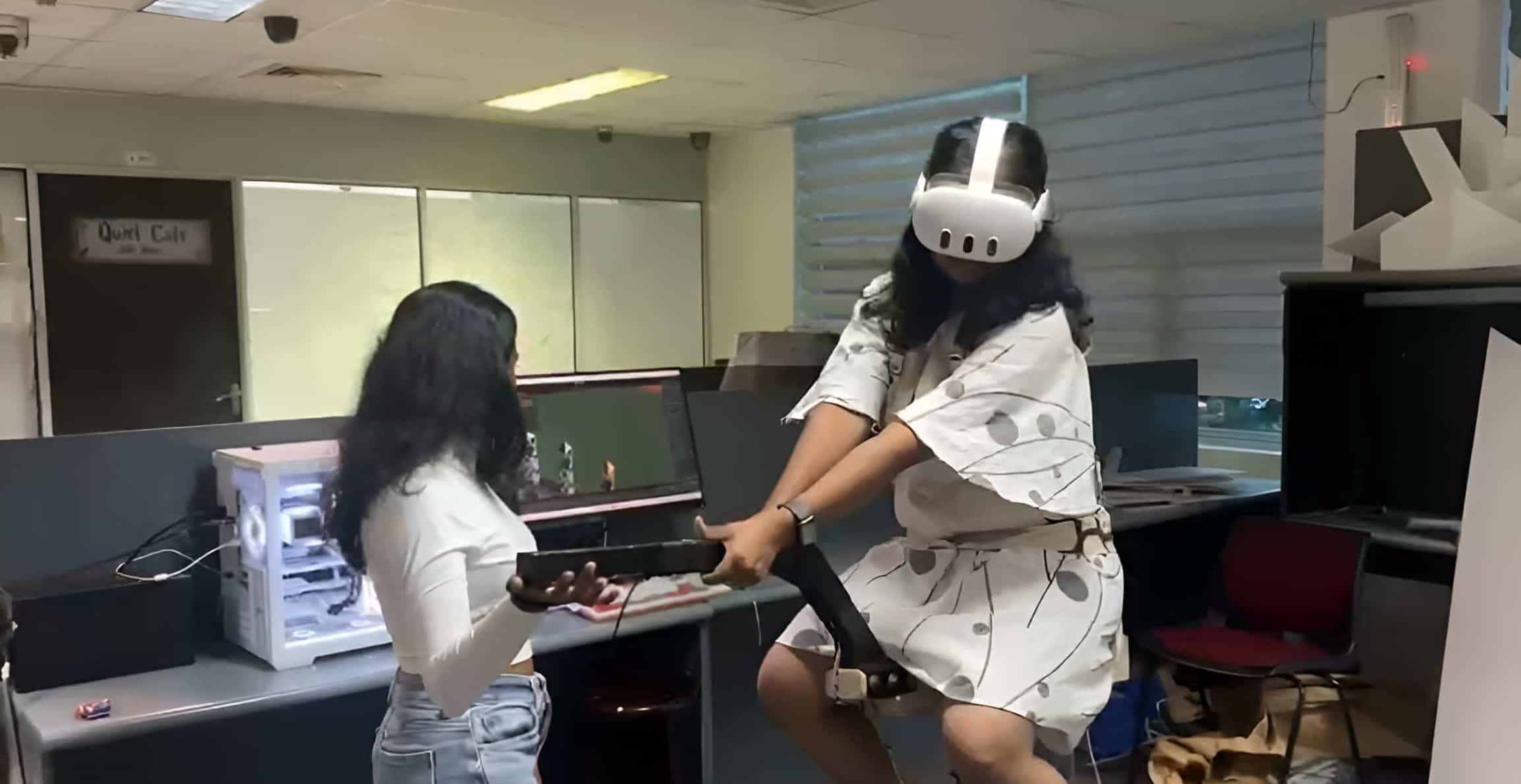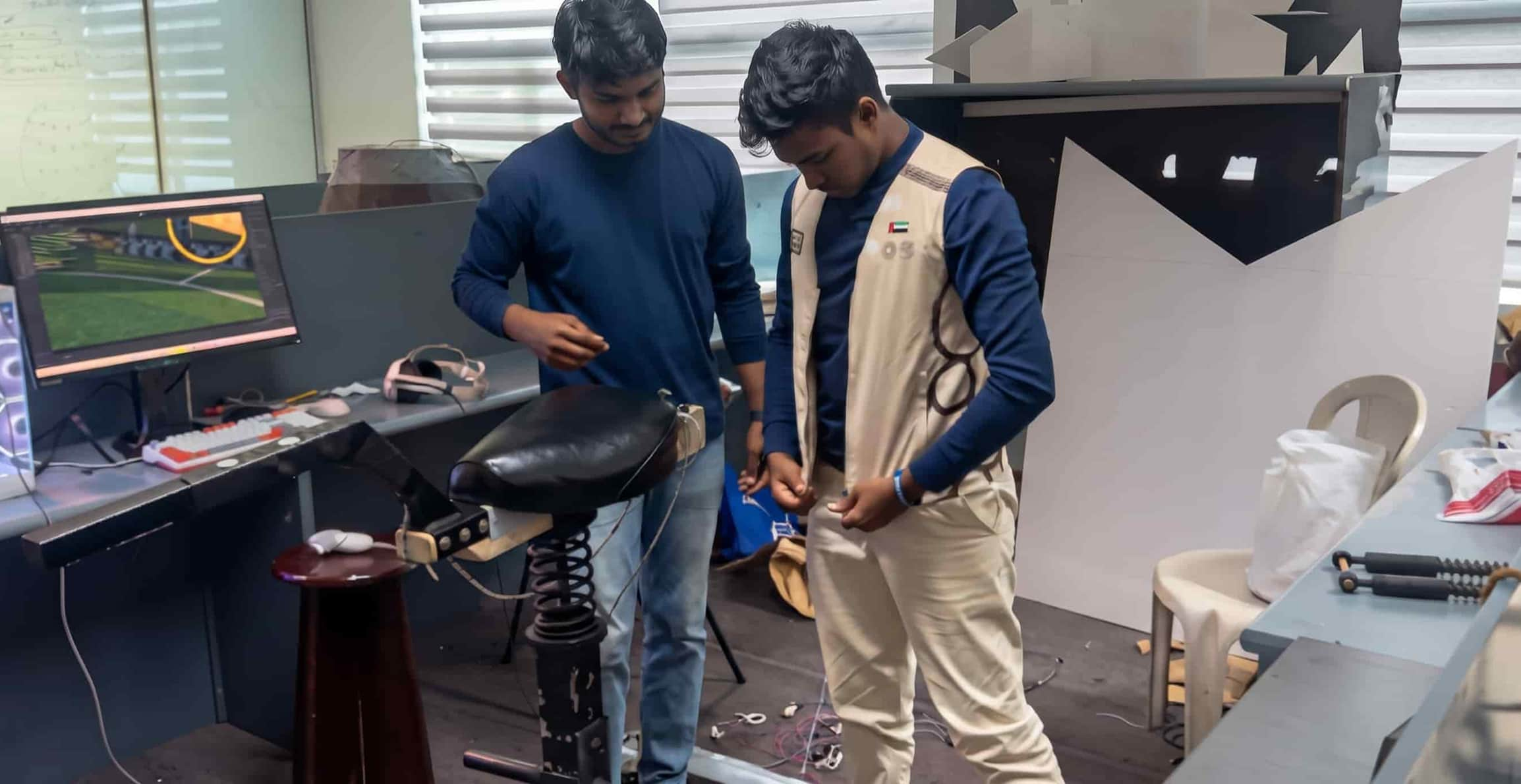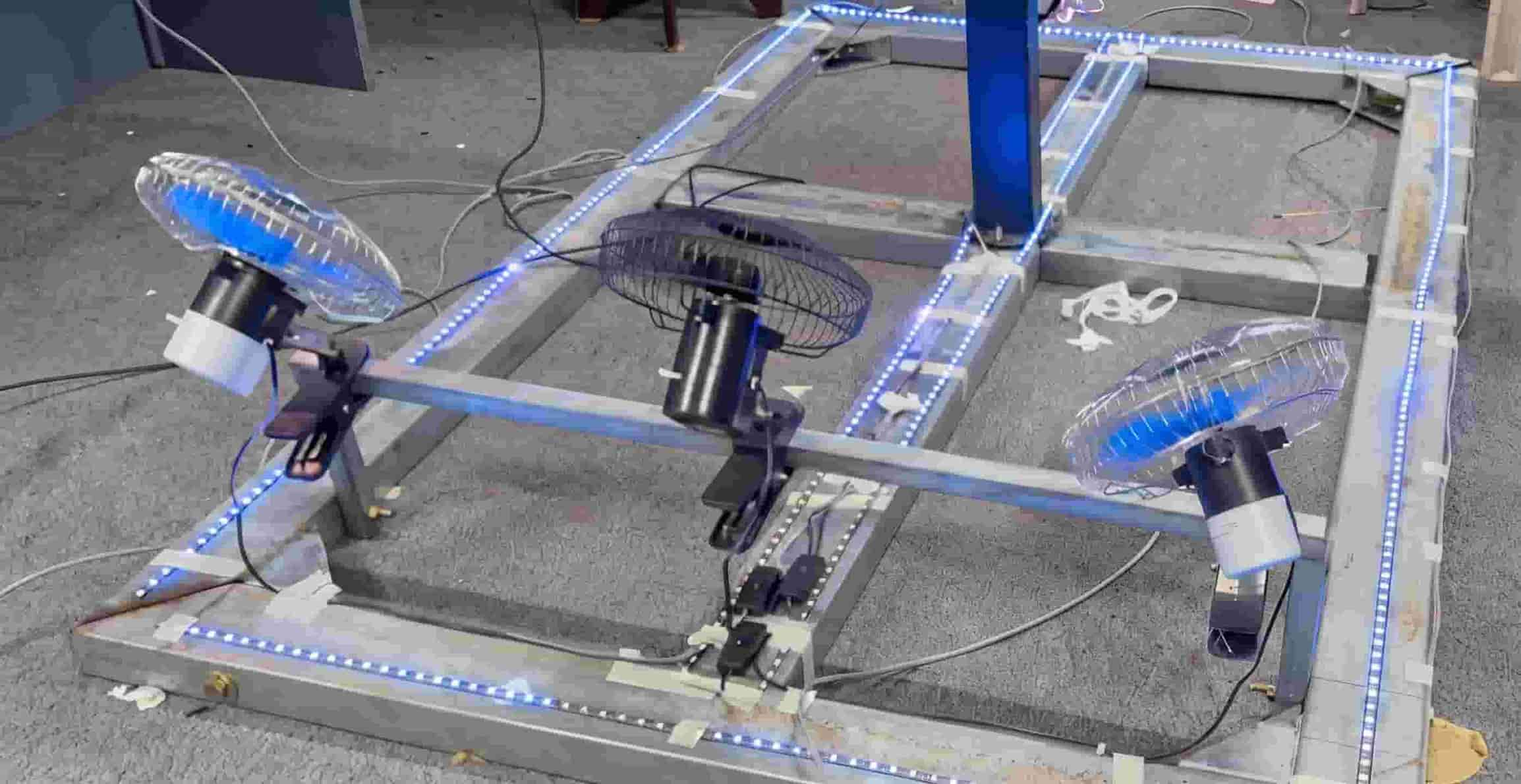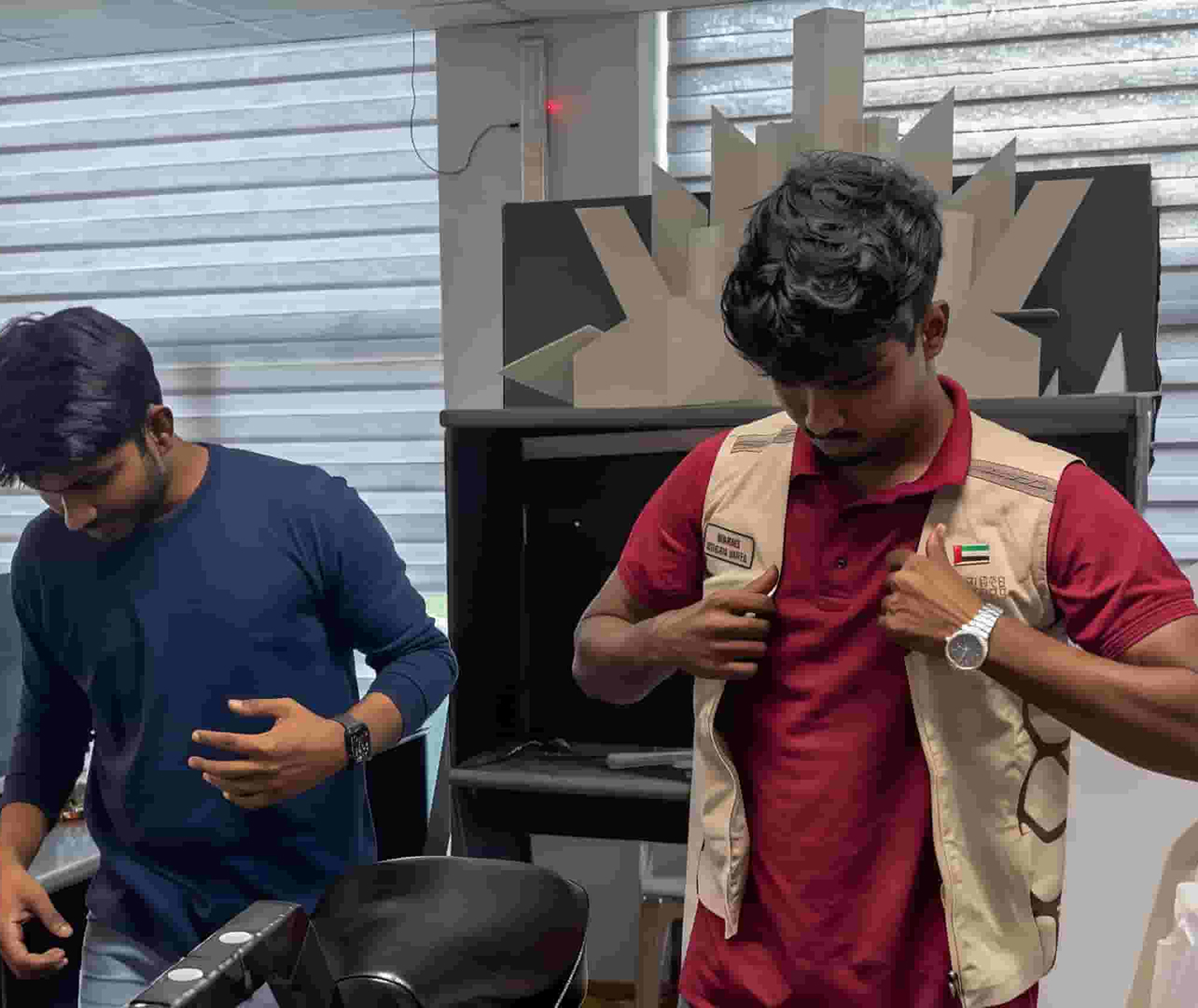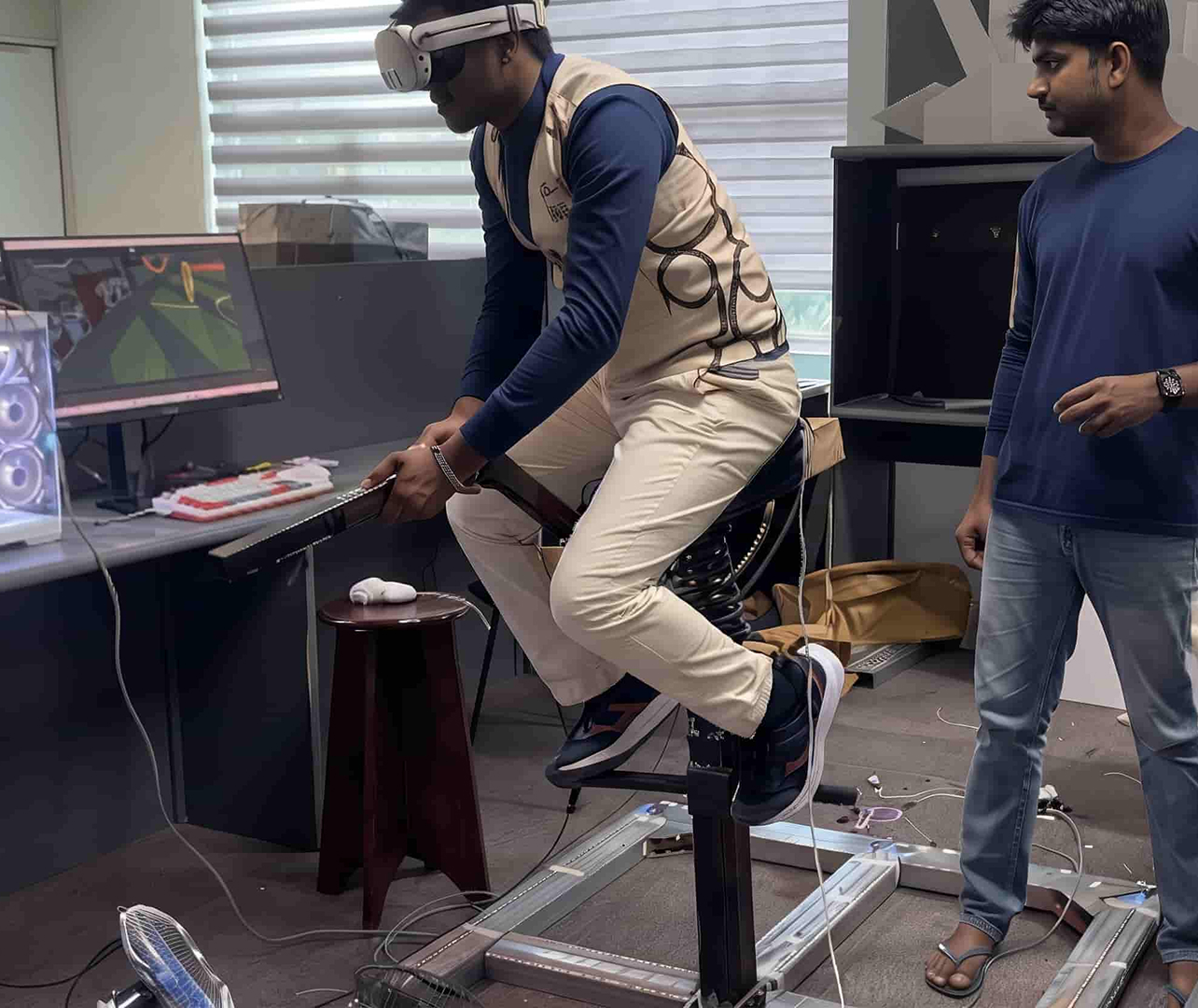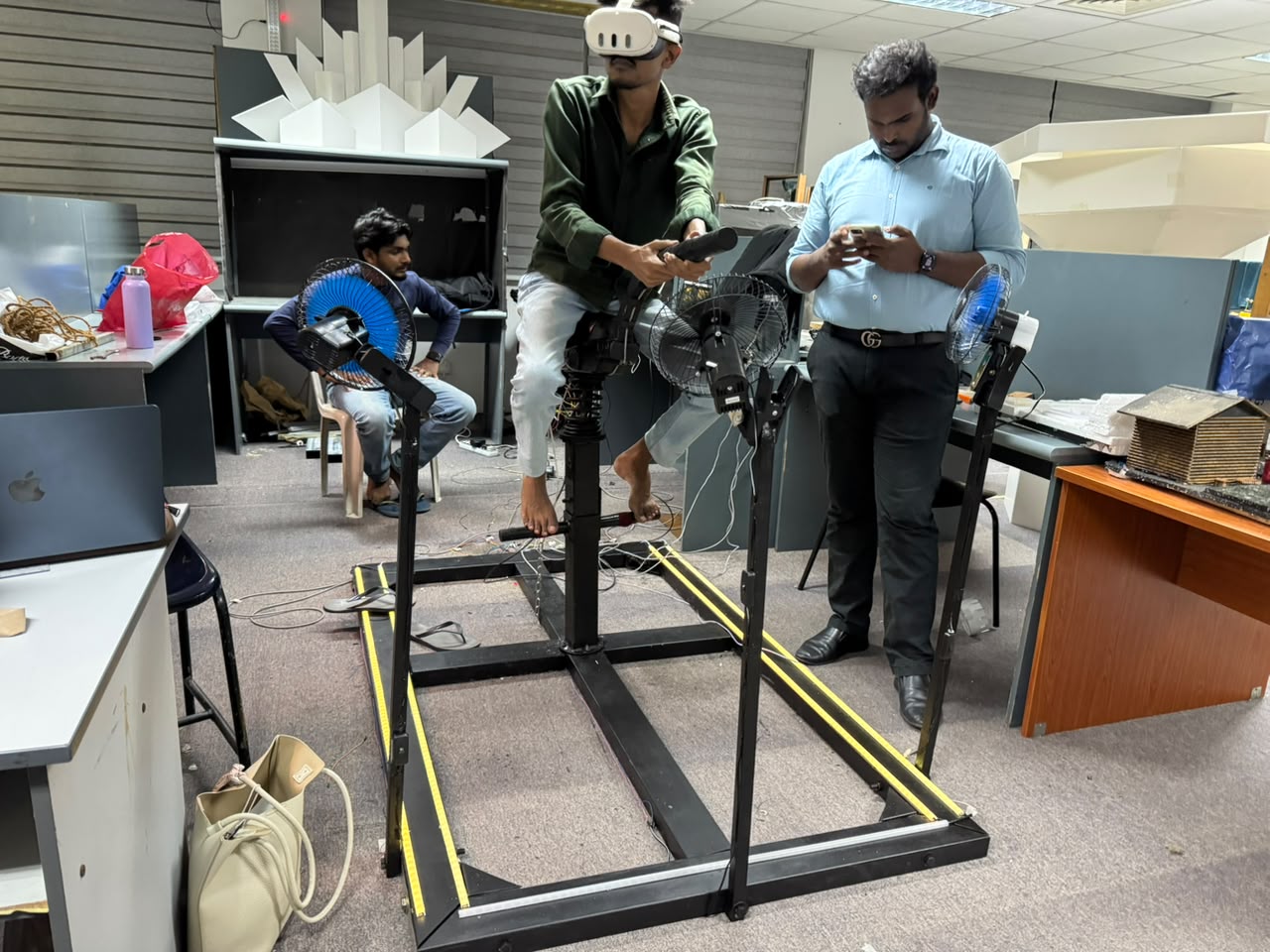
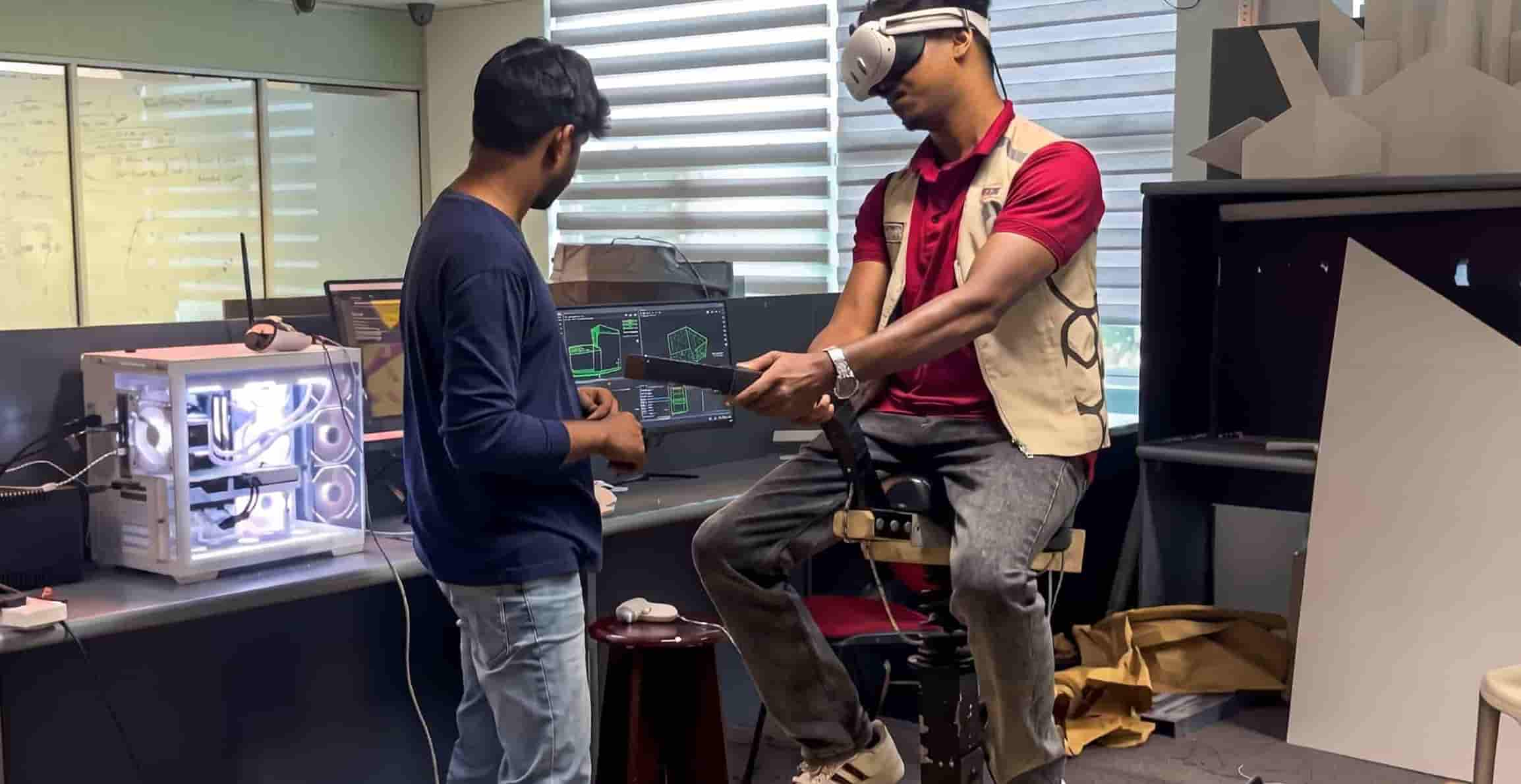
Translates pressure & gyroscope data into virtual flight movements and directional motion cues.
Contemporary virtual reality flight simulation often suffers from severe sensory decoupling, where rapid visual traversal across an aerial environment is mismatched by a static physical body.
To bridge this gap, the motion rendering and control component extracts real-time navigation parameters—specifically position, velocity, acceleration, and orientation—directly from the Unity simulation loop. By interpreting these dynamic telemetry variables, the system coordinates platform actuators to generate precise pitch, roll, and directional tilt movements.
The core architecture replaces conventional hand controllers with natural, embodied inputs by tracking IMU-based body-lean postures and FSR-based grip pressure. Within the multisensory rendering layer, motion cue mapping processes these vectors while applying specialized filtering, rate limiting, and command saturation constraints. This guarantees that platform transitions remain mechanically safe and smooth, successfully eliminating abrupt mechanical shifts that could otherwise cause user fatigue, disorientation, or cybersickness.