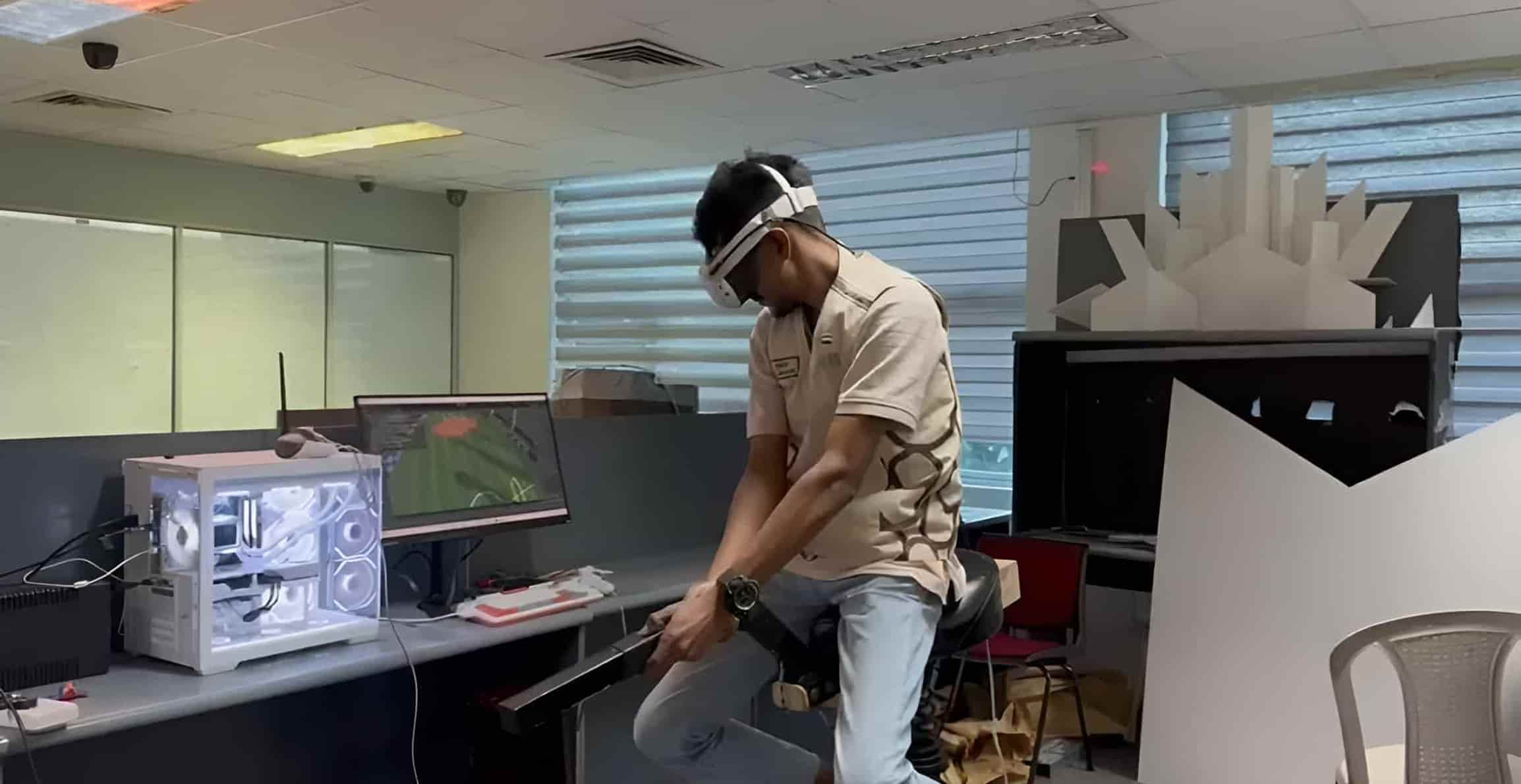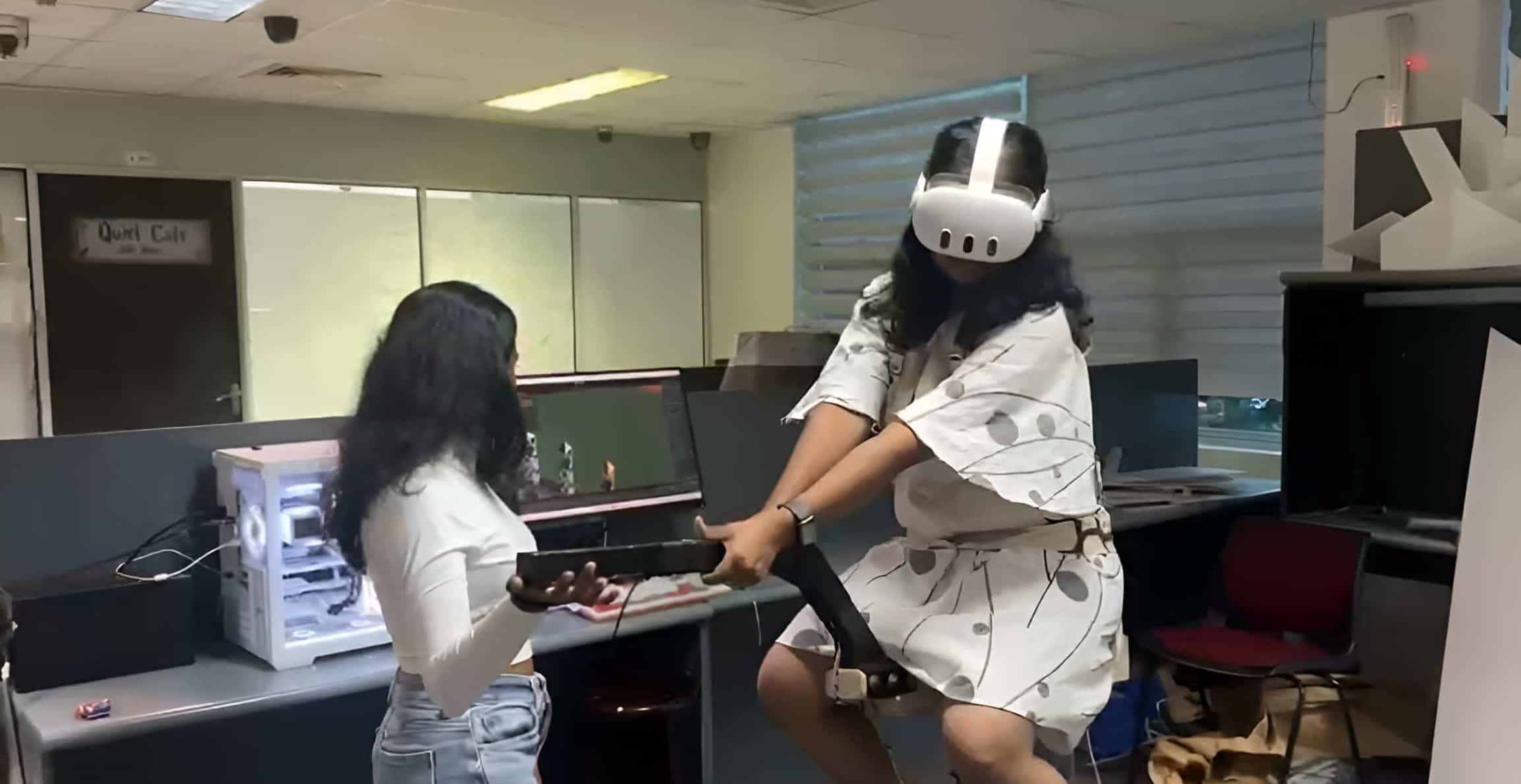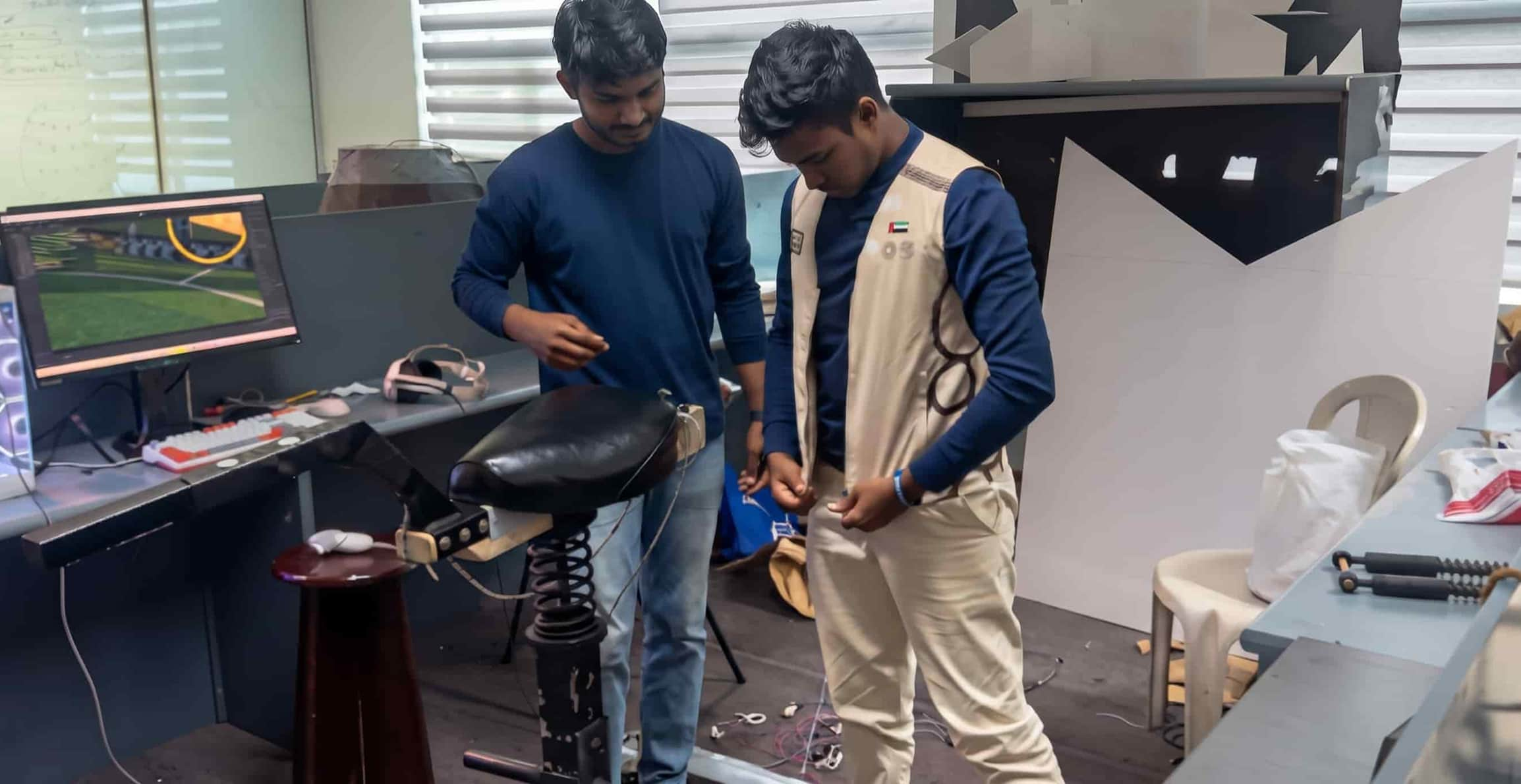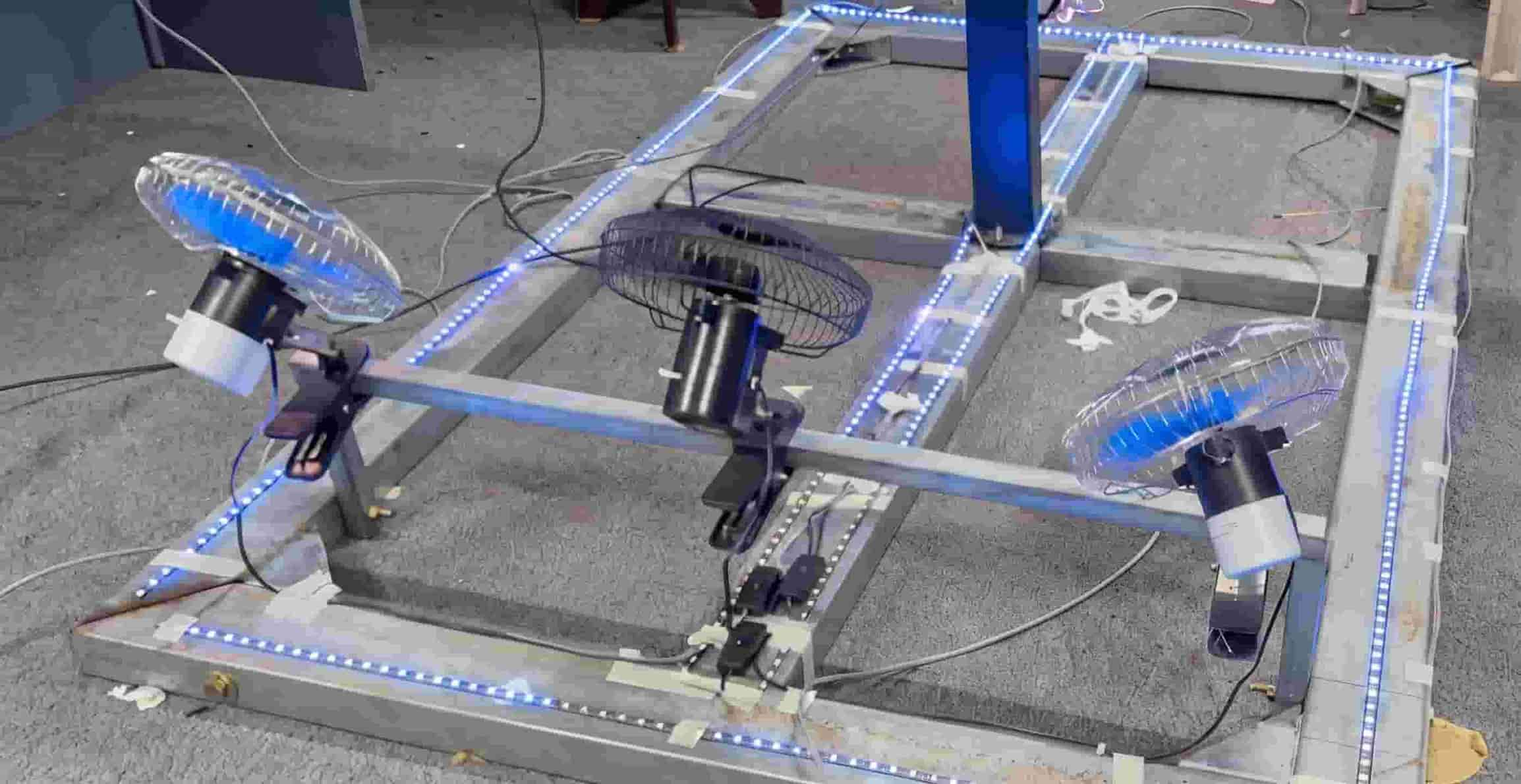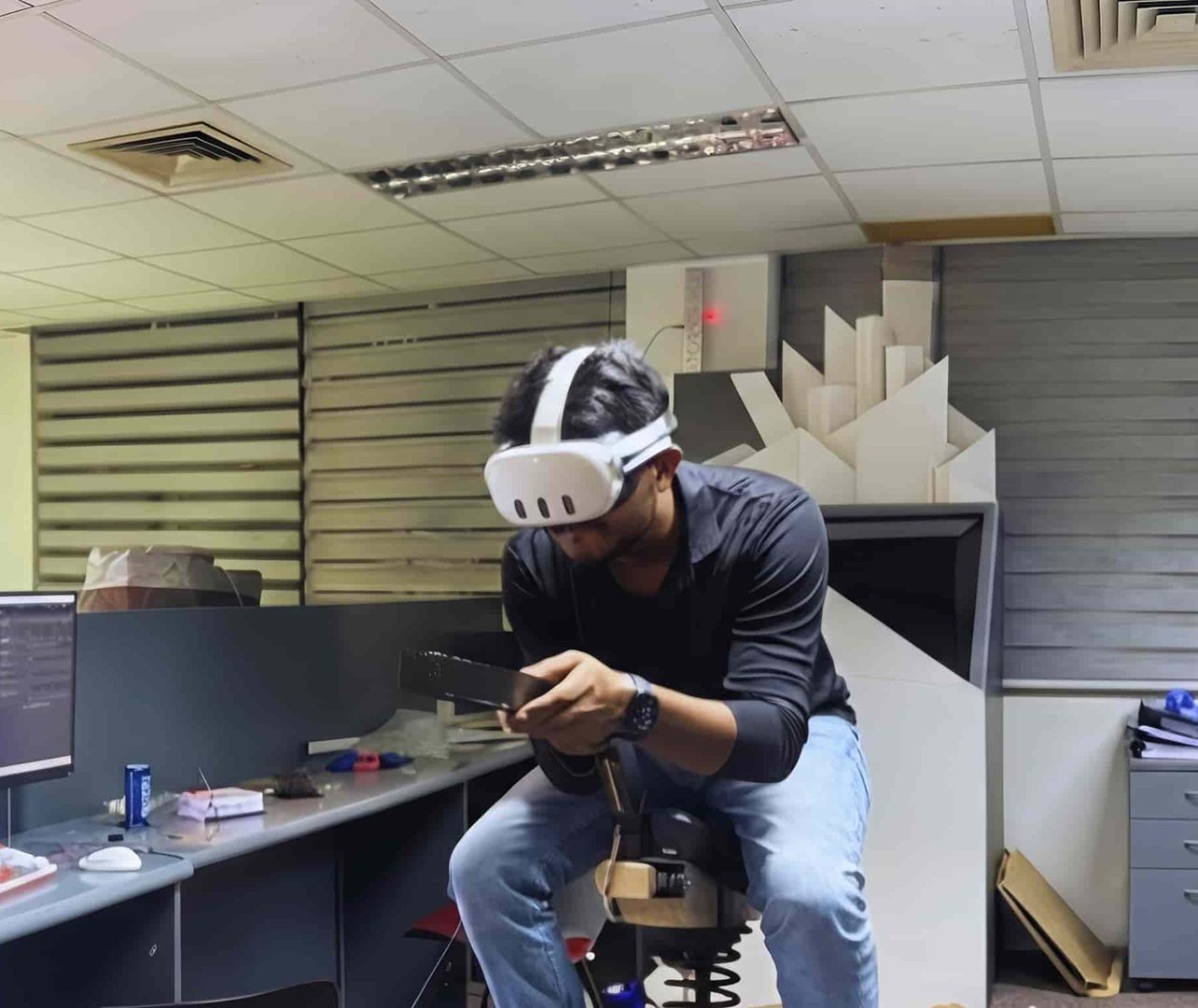
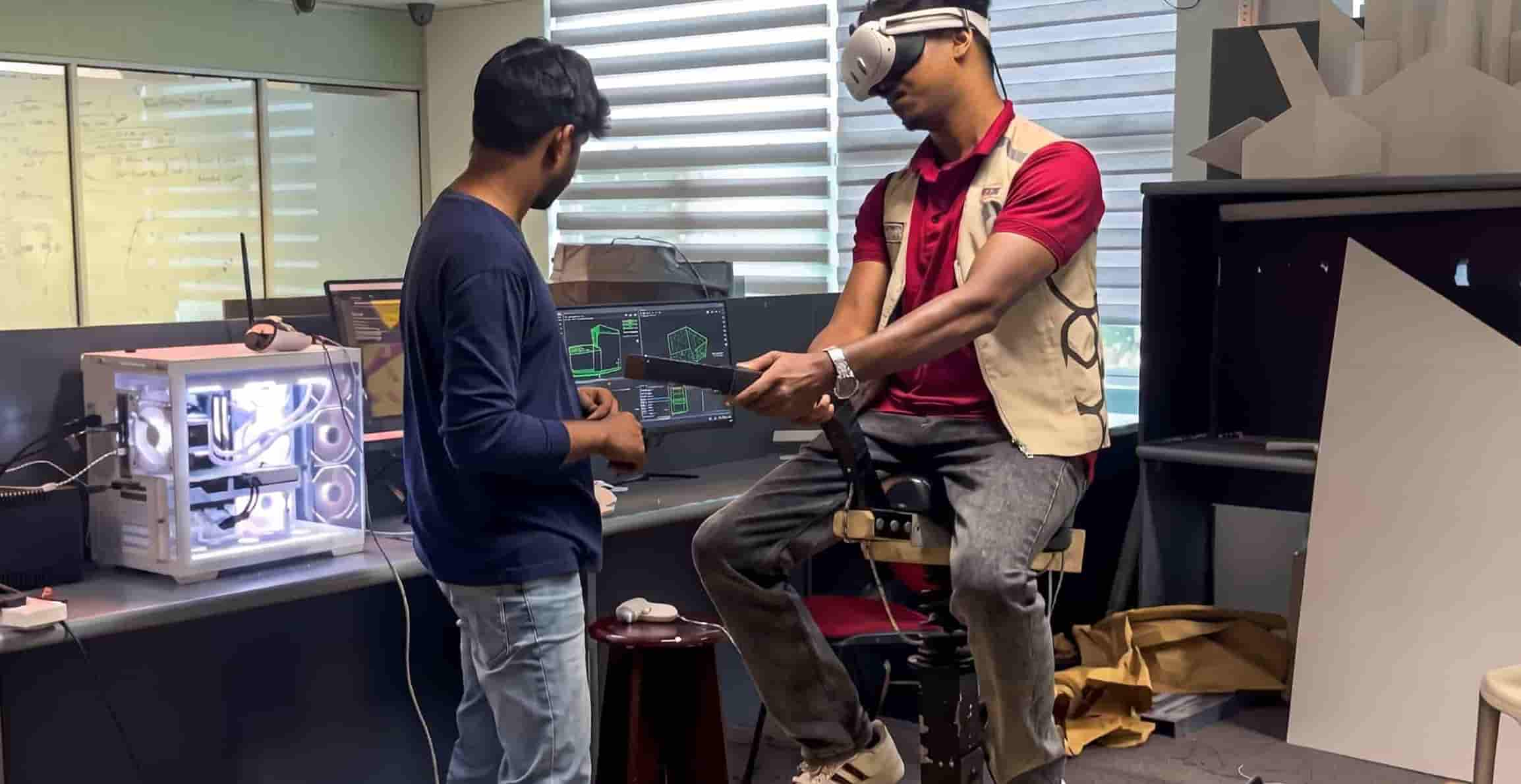
Translates virtual wind, speed, and turbulence into synchronized wearable haptic feedback.
Contemporary virtual reality flight simulation often creates a disconnect where users visually experience rapid wind and atmospheric turbulence while their physical bodies remain entirely unaffected.
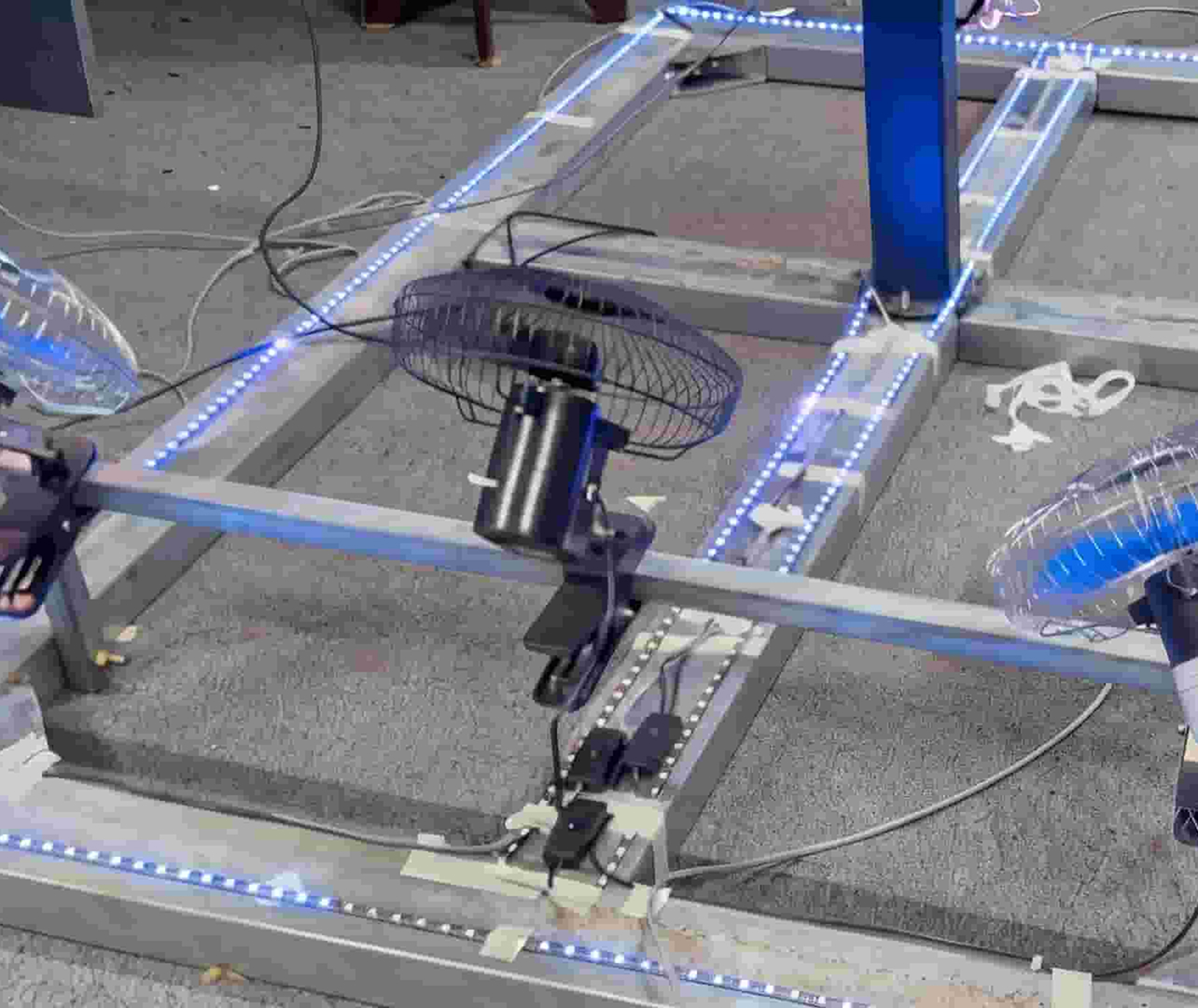
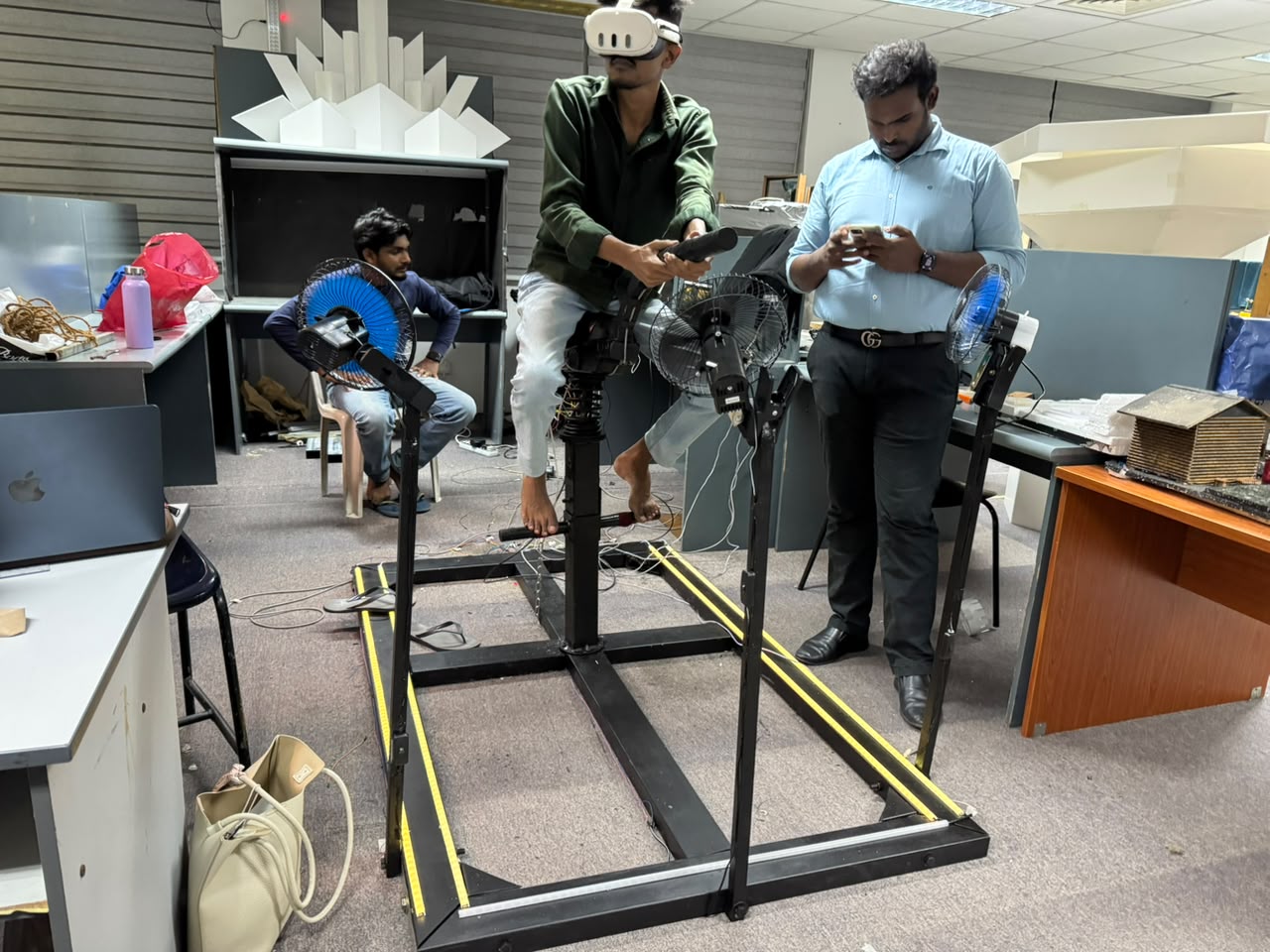
To bridge this gap, the environmental interaction and immersion modelling component extracts real-time environmental states—specifically wind speed, flight velocity, and turbulence levels—directly from the Unity simulation engine. By processing these atmospheric variables, the system coordinates downstream physical output modules to deliver targeted airflow blowers and wearable vibrotactile jacket feedback.
The core architecture uses an environment-driven model to decouple environmental cues from basic seat motion, ensuring that phenomena like sudden altitude drops or wind gusts trigger appropriate haptic patterns. Specialized mapping and filtering layers regulate signal intensity to prevent sensory overload, successfully elevating perceived realism and full-body immersion.