Mitigating Sensory Mismatch in VR Navigation through Coordinated Physical Motion Feedback

From body-lean steering to coordinated seat motion and wind, we eliminate sensory mismatch in VR navigation.
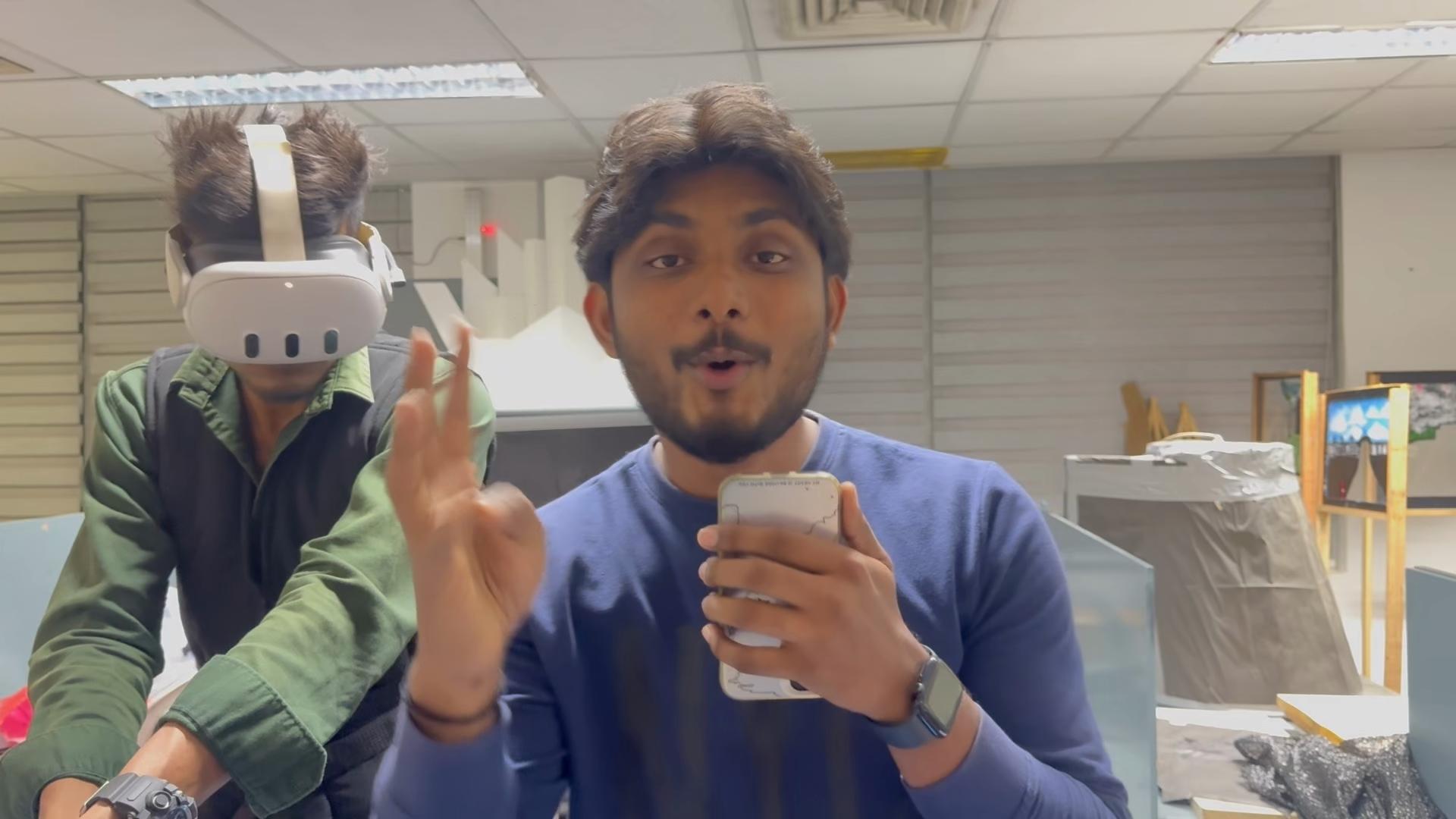
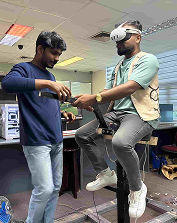
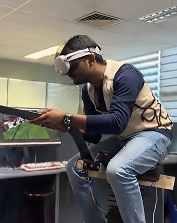
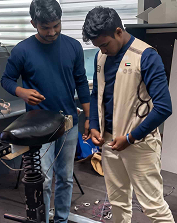
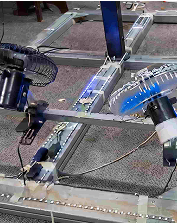
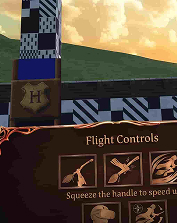
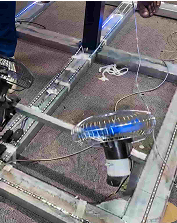
VR navigation gives high visual fidelity, but the absence of physical feedback causes sensory mismatch.
/RESEARCH
COMPONENTS
A modular research framework designed to translate virtual aerial navigation.
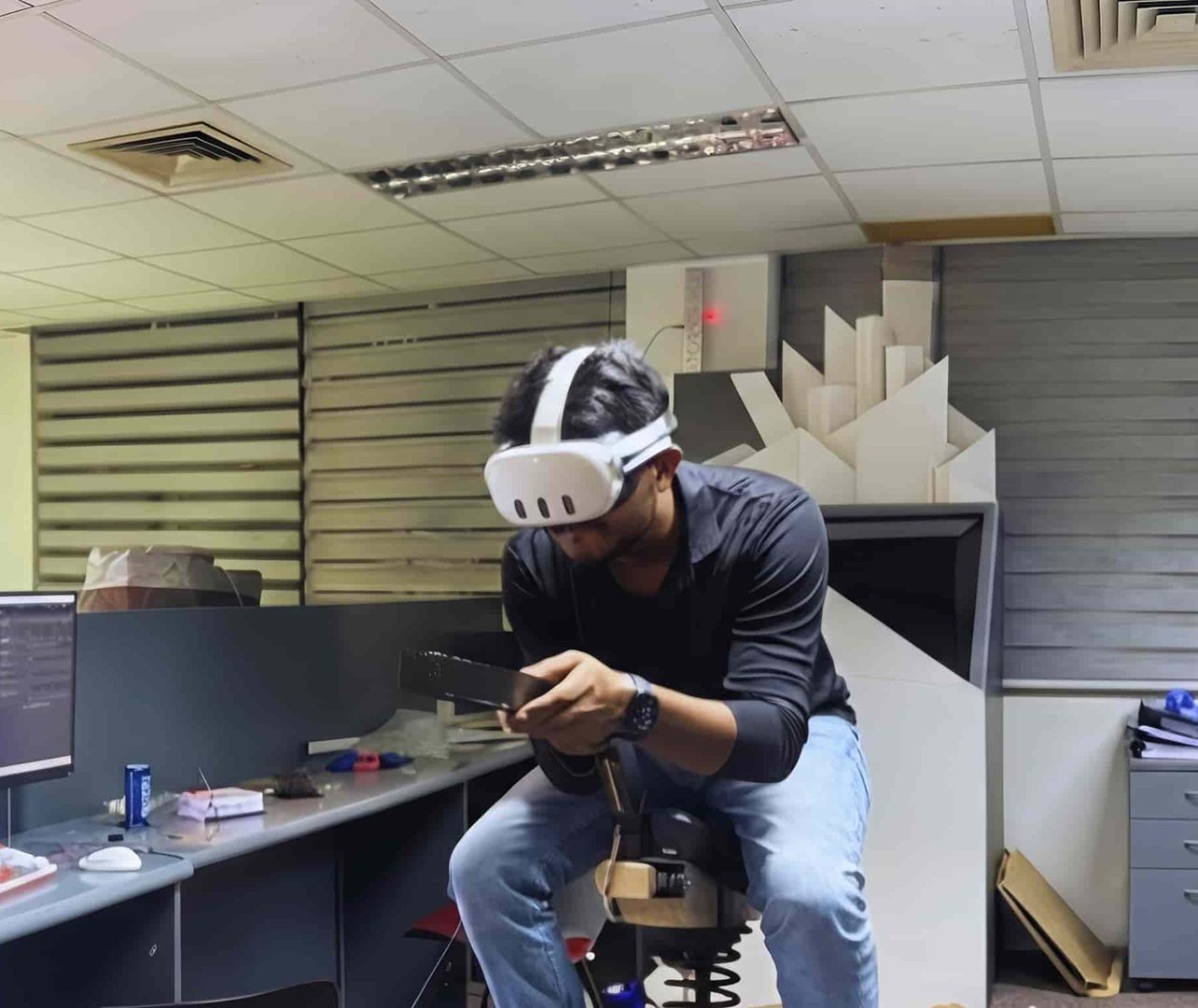
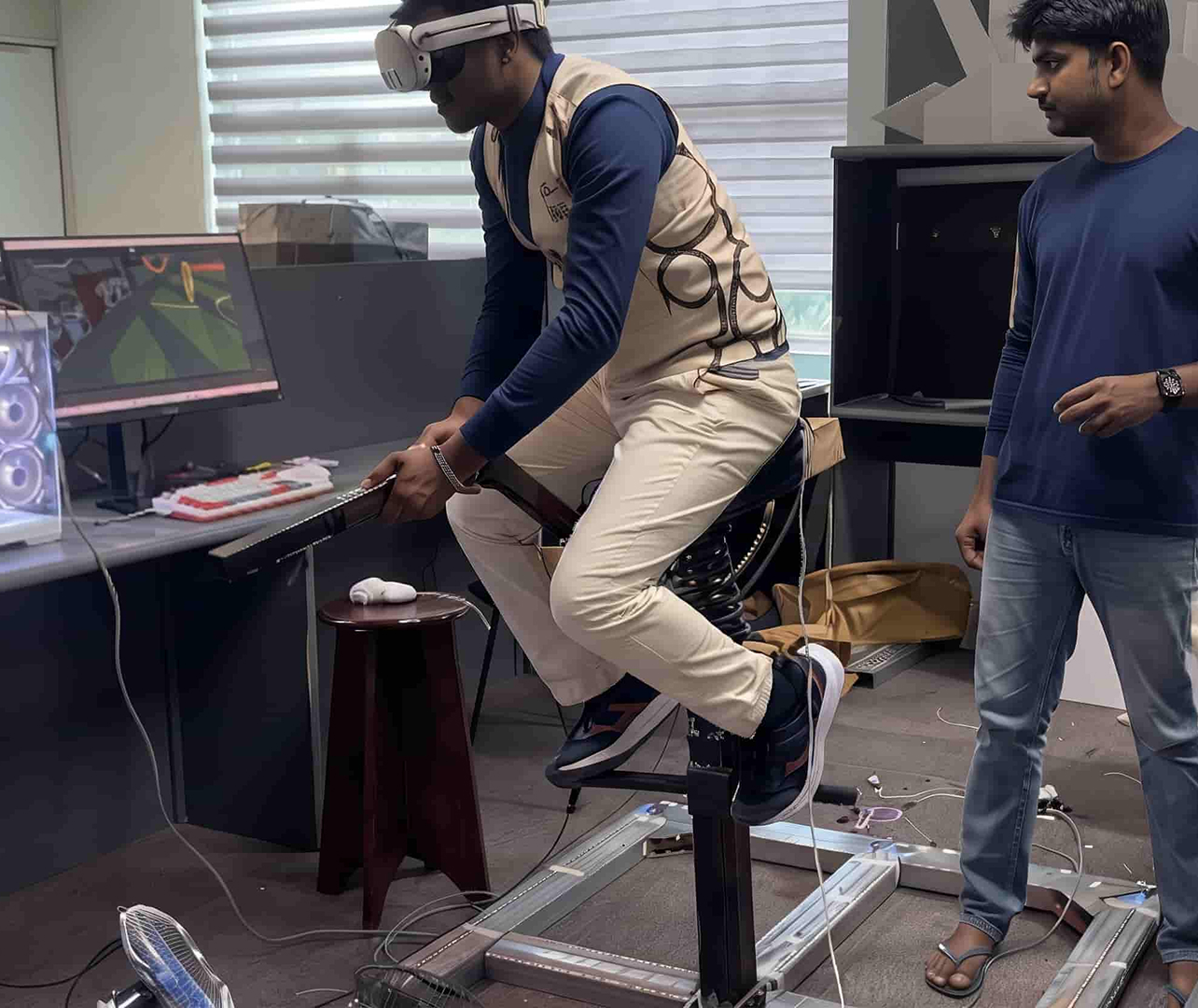
The primary aim is to develop and evaluate a multisensory VR flight platform integrating motion, sensory feedback, low-latency control, and a stable seat rig.
Key research progression milestones, academic assessment phases, and project deliverable timelines.

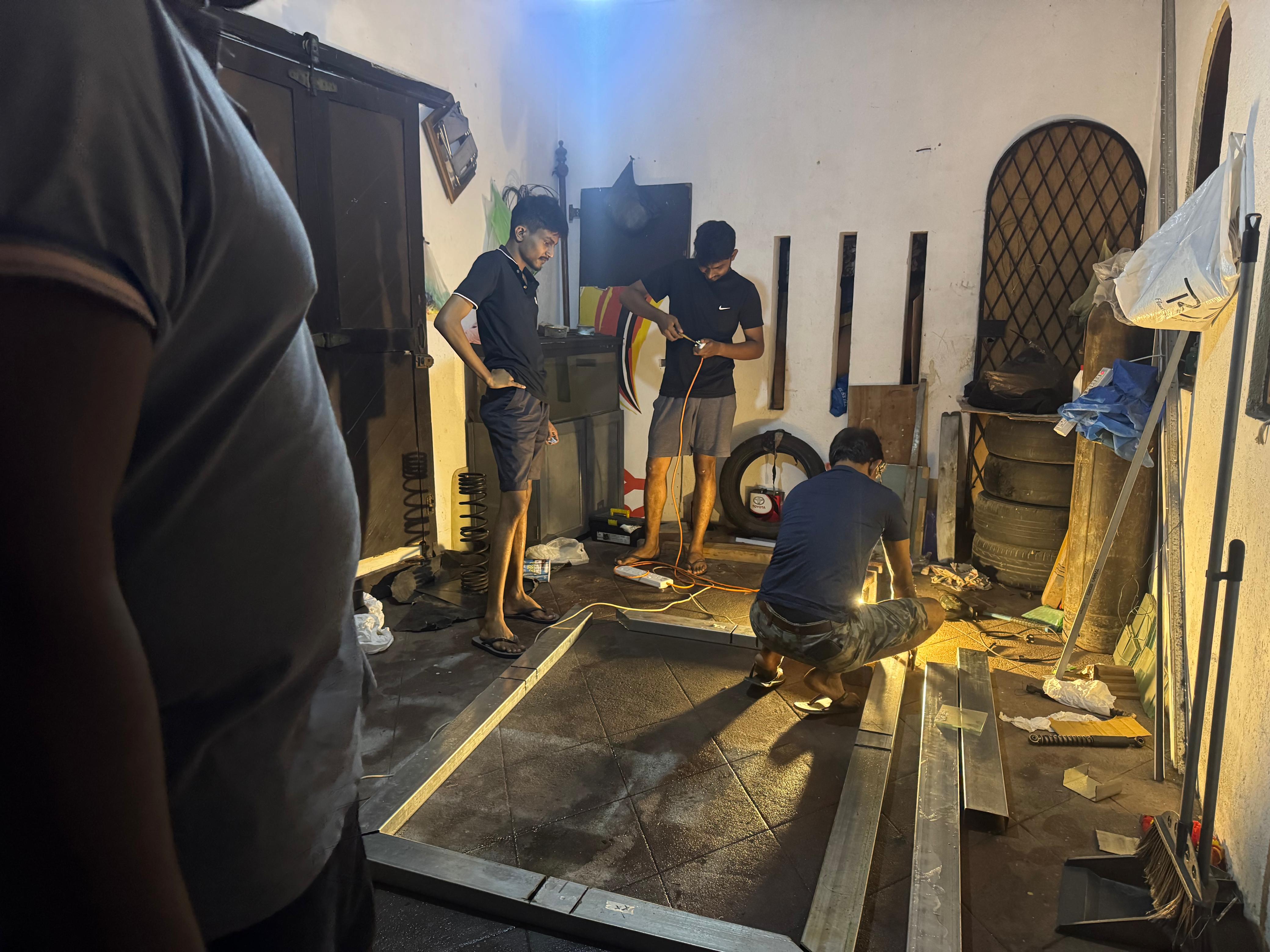
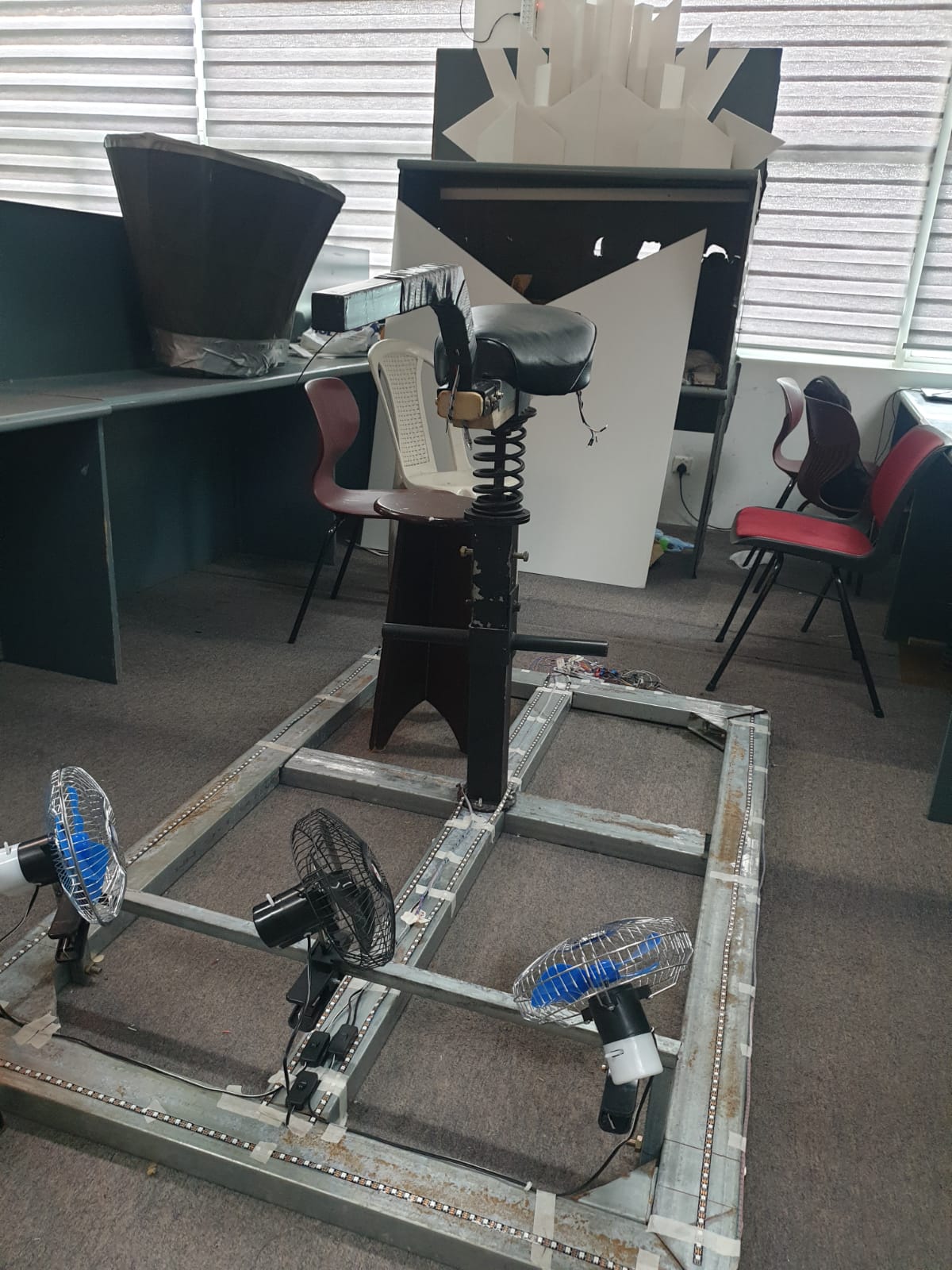
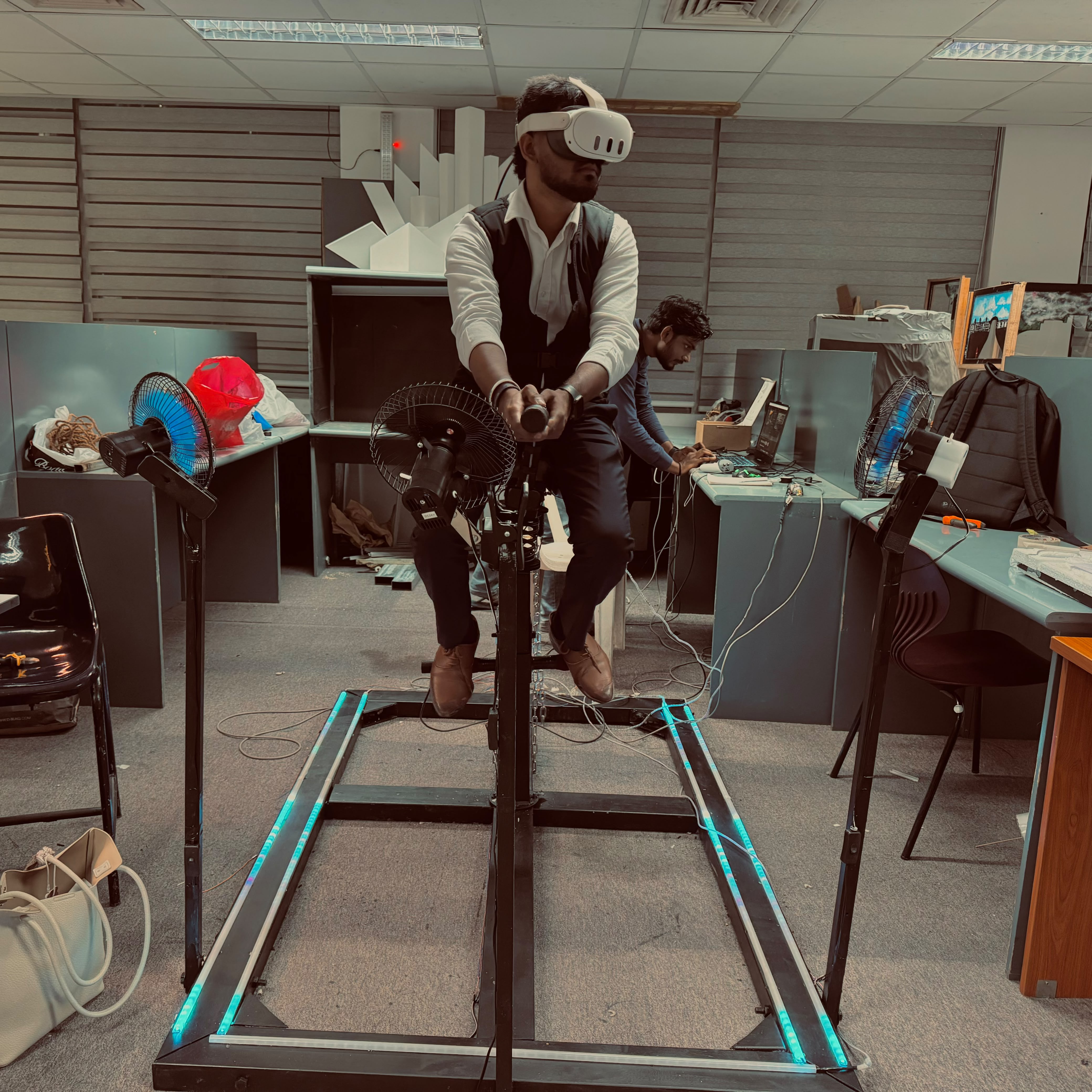
We validate the system using technical performance benchmarks and user evaluations to confirm realistic, comfortable flight.
Synchronizing body posture and tactile cues for natural flight.

Consolidating body posture, environment dynamics, and multi-cue physical actuation into a unified research platform.
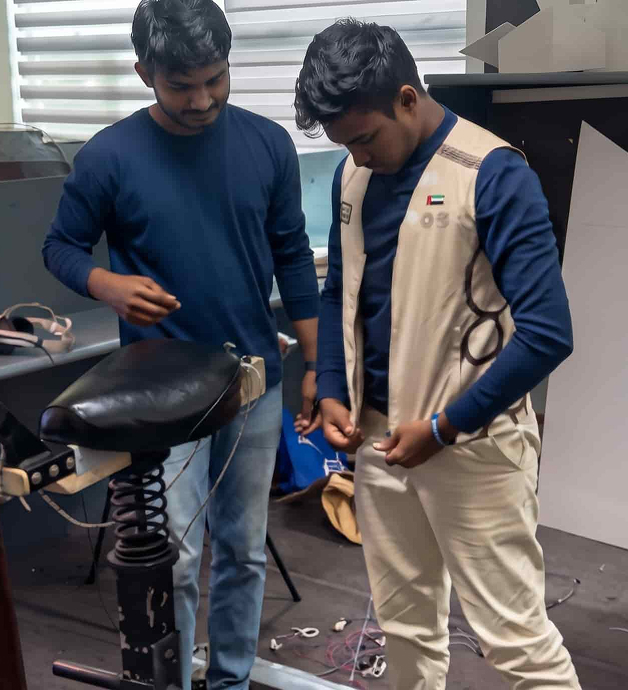
Research Documents & Reports
Official research proposals, project charters, quality assurance checklists, and the final research documentation.
Detailed research proposal defining objectives, literature analysis, methodology, and feasibility for VR flight motion simulation.
Formal project governance charter outlining scope boundaries, deliverables, team roles, and agreement structure.
Execution and verification checklist covering hardware safety, firmware testing, integration, and milestone readiness.
Complete research thesis detailing findings, mathematical kinematics, empirical evaluation, and hardware benchmarks.
All project documents and artifacts are maintained under academic integrity standards for the Faculty of Computing, SLIIT (Project R26-IM-004).
The Minds Behind Embodied VR
Undergraduate research group R26-IM-004 from the Faculty of Computing, Sri Lanka Institute of Information Technology (SLIIT). Investigating multi-sensory physical feedback to eradicate sensory conflict and cybersickness in virtual reality navigation.

Lonath Gunawardena
Formulated the real-time telemetry communication pipeline bridging Unity virtual flight dynamics to physical 2-DOF actuator motion. Engineered pitch, roll, and posture tilt algorithms to counteract visual-vestibular conflict and eliminate VR sickness.

Rusheni Botheju
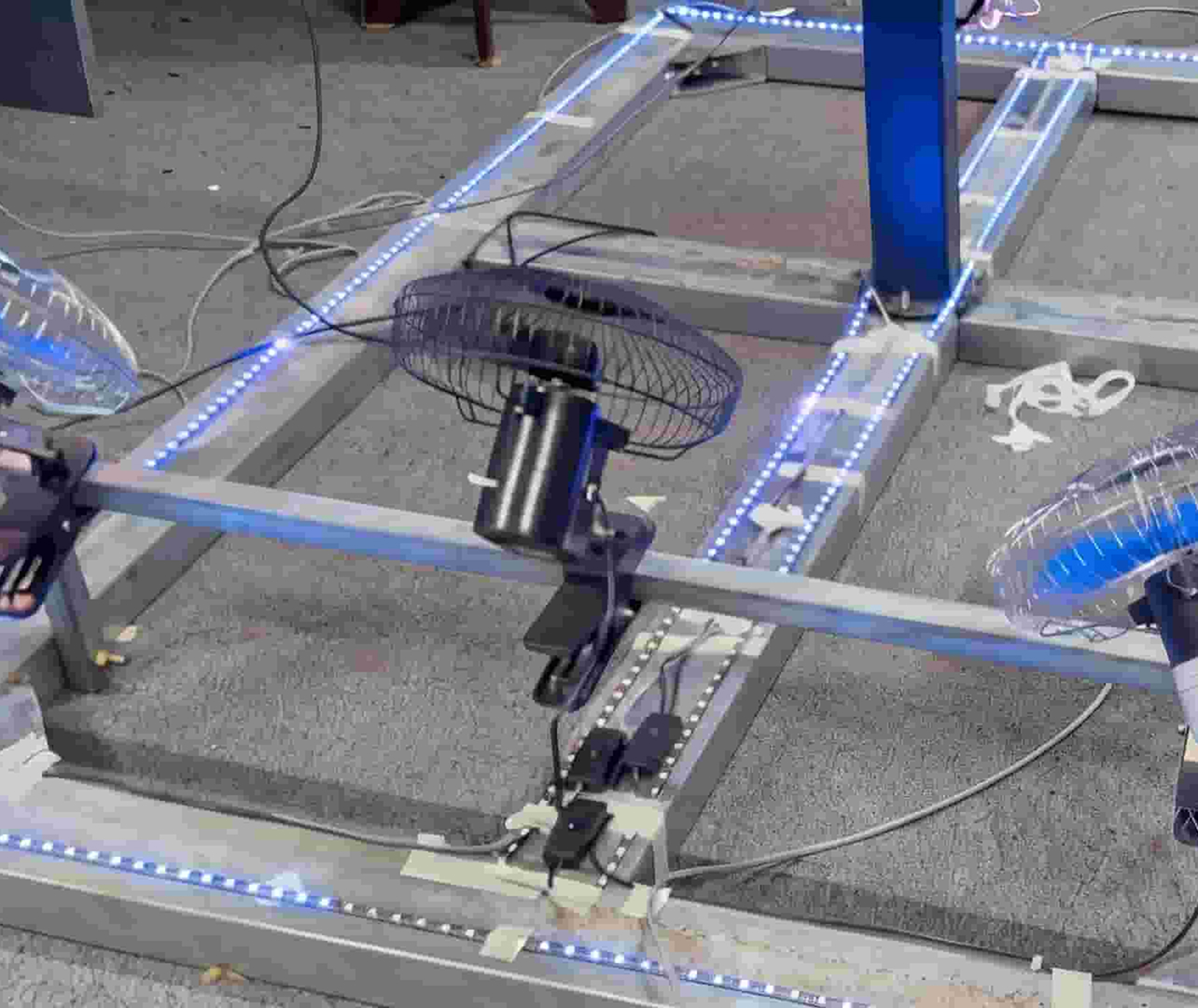
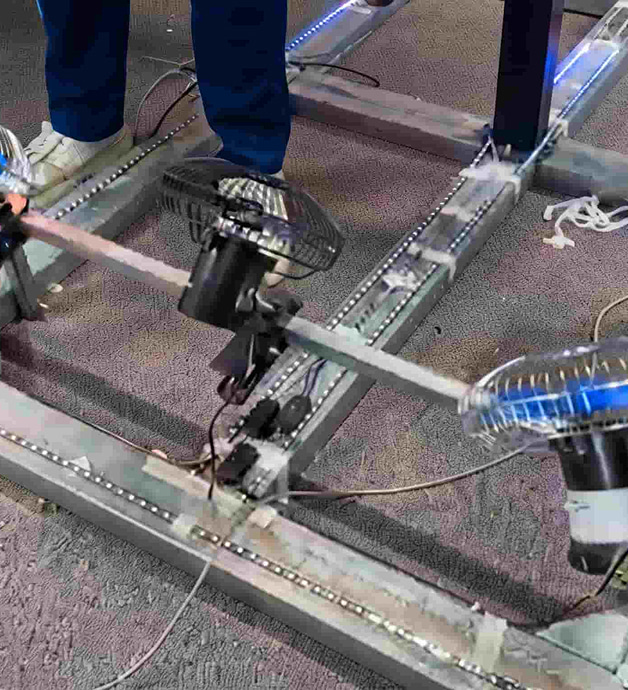
Engineered atmospheric aerodynamic simulation modeling with dual directional airflow fans and micro-turbulence feedback. Dynamically maps virtual airspeed vectors to tangible physical wind currents for authentic somatosensory presence.

Shehan Nimsara
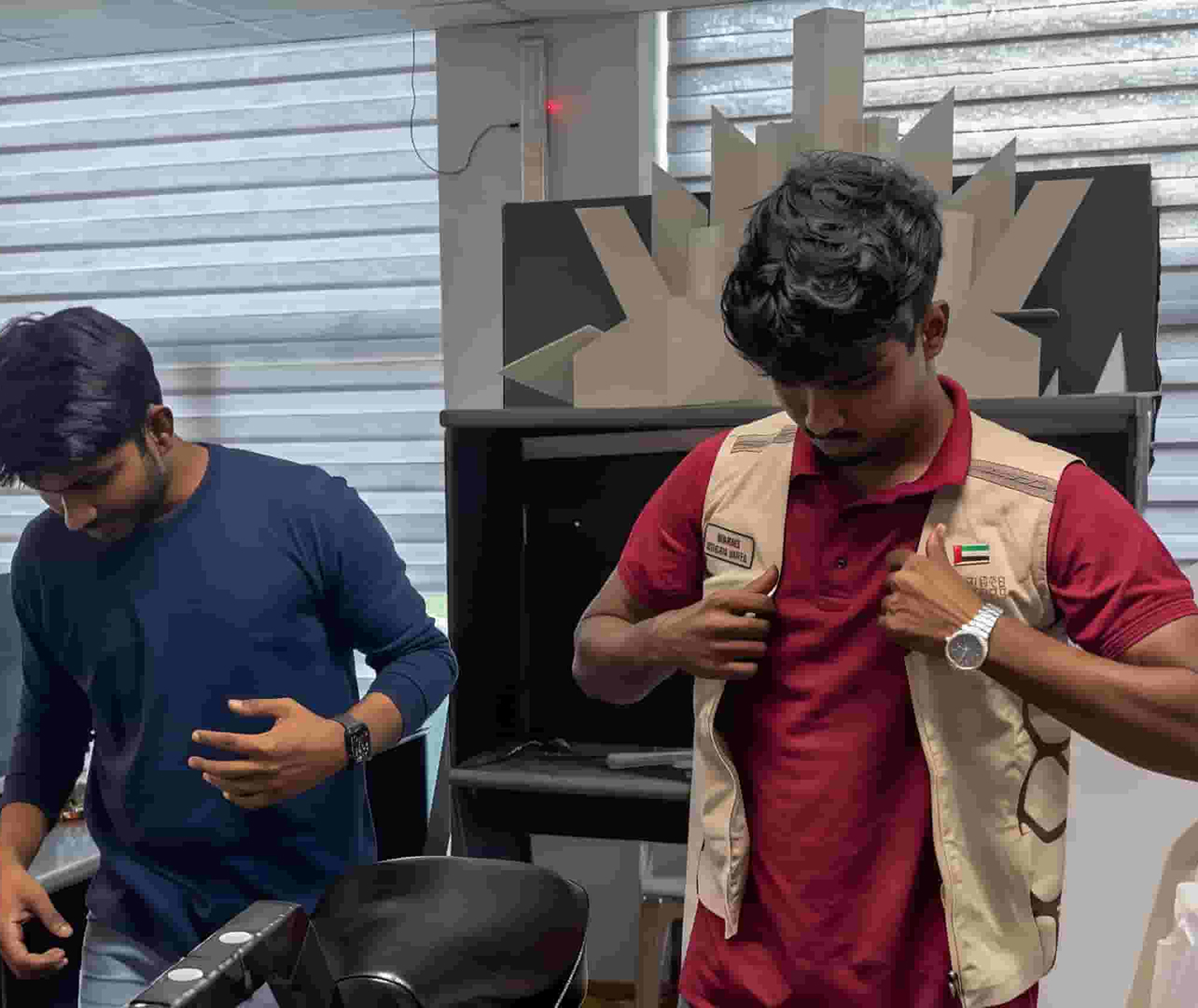
Developed the wearable localized vibrotactile haptic vest array and external chassis lighting system. Delivers tactile acceleration, engine stall, and G-force cues to the pilot while broadcasting synchronized telemetry visuals to spectator audiences.

Sashik Silva
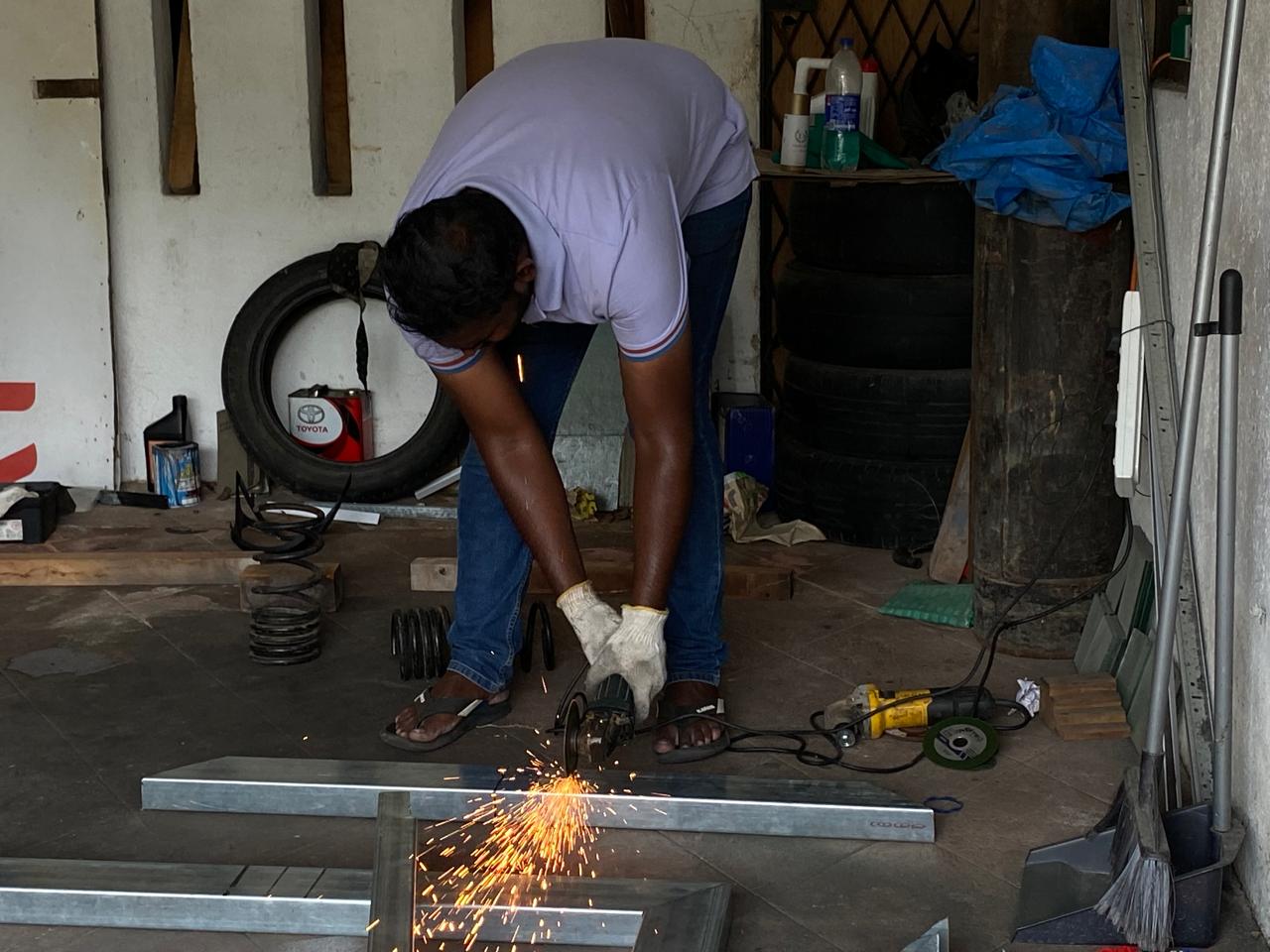
Designed and fabricated the modular tubular steel chassis, ergonomic flight cockpit seating, and precision actuator linkages. Calibrated mechanical travel stops, center-of-gravity stabilization, and safety protocols for robust physical interaction.

Moving in VR without physical sensations causes sensory mismatch and motion sickness. The platform resolves this by pairing visual flight with real-time seat tilt, variable airflow, and localized haptic cues to maintain bodily coherence.
Gyroscope and pressure sensors capture body-lean tilt and handle compression, directly driving pitch, roll, and flight velocity without relying on traditional joysticks.
Environmental states in Unity trigger variable airflow blowers, directional wind currents, and vibrotactile vest pulses to recreate ambient flight forces.
The navigation architecture applies strict deadzone threshold filtering to tilt-to-turn inputs, separating deliberate body-lean maneuvers from involuntary movements to maintain stable heading control.